IGI vs GIA for Lab-Grown Diamonds: What Each Report Tells You (2026)
By Vanika · Updated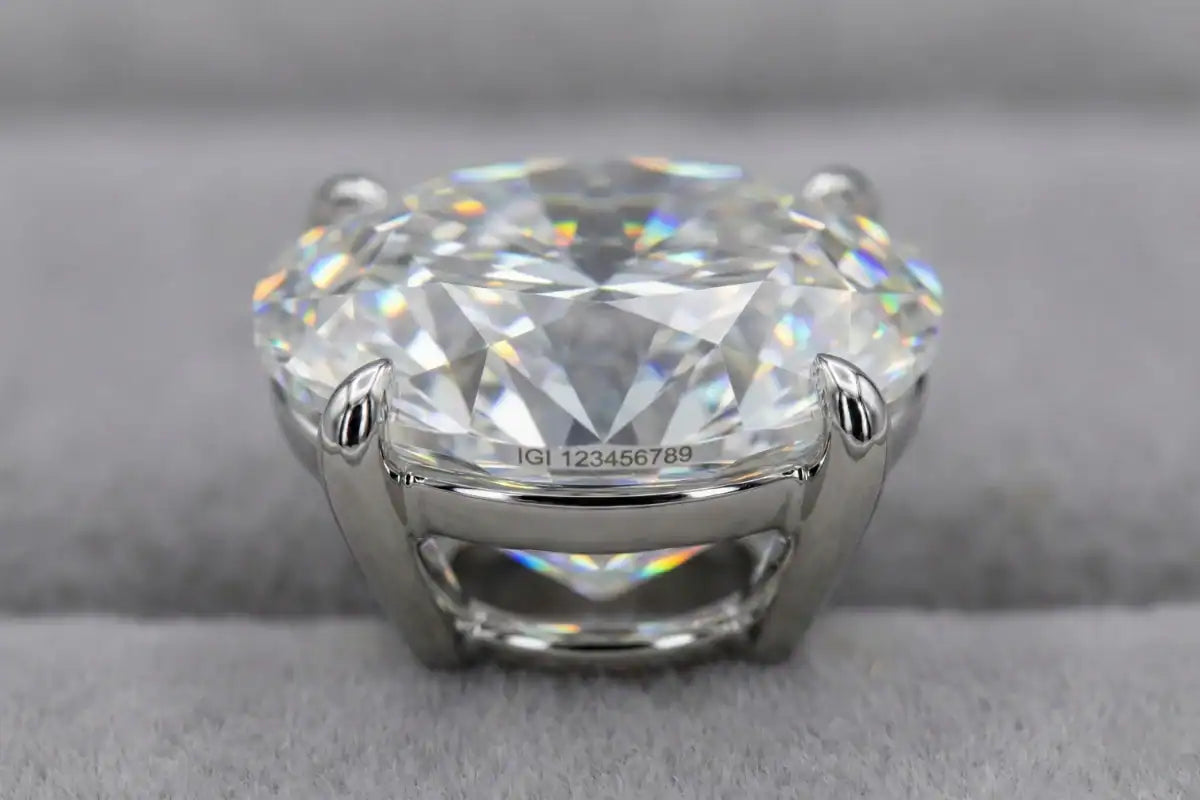
Quick Answer: IGI vs GIA for Lab-Grown Diamonds
| IGI report | Exact colour, clarity and cut grades |
| GIA (from 1 Oct 2025) | Premium or Standard, no colour or clarity grade |
| GIA Premium | D colour, VVS or better, excellent finish |
| GIA Standard | E to J colour, VS or better, very good finish |
| Natural diamonds | Both labs give full grades |
From GIA's announcement of 2 June 2025 and its service terms effective 1 October 2025.
For a lab-grown diamond, an IGI report gives the exact colour, clarity and cut grade, while GIA, since 1 October 2025, labels lab-grown stones only Premium or Standard. GIA's Standard band covers colours E to J, six grades that an IGI report tells apart. For natural diamonds, both labs still grade the full 4Cs.
In This Guide
IGI vs GIA Side by Side
| For lab-grown diamonds | IGI | GIA (from 1 October 2025) |
|---|---|---|
| Colour | Grade, such as E or G | Not graded; part of Premium or Standard |
| Clarity | Grade, such as VVS2 or VS1 | Not graded; part of Premium or Standard |
| Cut (round brilliant) | Graded | Part of Premium or Standard |
| Overall result | Full set of grades | Premium, Standard, or no assessment |
| Growth method | Stated, such as CVD | Identified as laboratory-grown |
| Laser inscription | Usually the report number, on the girdle | The words Laboratory-Grown and the assessment number |
GIA terms from its 2 June 2025 announcement and service details reported by Modern Jeweler. IGI fields from a published IGI Laboratory Grown Diamond Identification Report.
What GIA Changed and Why
On 2 June 2025, GIA announced it would stop using its natural-diamond colour and clarity scale for laboratory-grown diamonds. Its reason: "More than 95% of laboratory-grown diamonds entering the market fall into a very narrow range of color and clarity." The new service started on 1 October 2025.
Each stone is now labelled Premium or Standard, based on colour, clarity and finish together. A stone that misses the Standard minimums gets no quality assessment. GIA says existing reports for lab-grown diamonds remain valid.
| GIA label | Colour | Clarity | Polish and symmetry | Cut (rounds only) |
|---|---|---|---|---|
| Premium | D | VVS or better | Excellent | Excellent |
| Standard | E to J | VS or better | Very good (good allowed for fancy shapes) | Very good |
Key Finding: GIA's Standard label covers every colour from E to J. Two lab-grown diamonds, one E and one J, can both be GIA Standard, while IGI reports them as E and J. If you want to compare stones grade by grade, the IGI report is the one that shows it.
What It Means When You Buy
- Comparing prices: a price is only comparable at the same grade. IGI grades let you match an E VS1 against another E VS1.
- Buying a GIA-labelled stone: ask the seller for the actual colour, because Standard alone does not say it.
- Older GIA reports: a lab-grown report from before October 2025 can still show colour and clarity grades, and GIA treats it as valid.
- Natural diamonds: GIA still grades them on the full colour and clarity scale.
Chaitra uses IGI. Every diamond above 0.5 carat comes with its own IGI report, and smaller stones are covered by one IGI report for the whole piece. Our diamonds are E to G colour and VVS to VS clarity, so on colour and clarity they sit in GIA's Standard band, not Premium, which needs D colour.
Reading and Verifying a Report
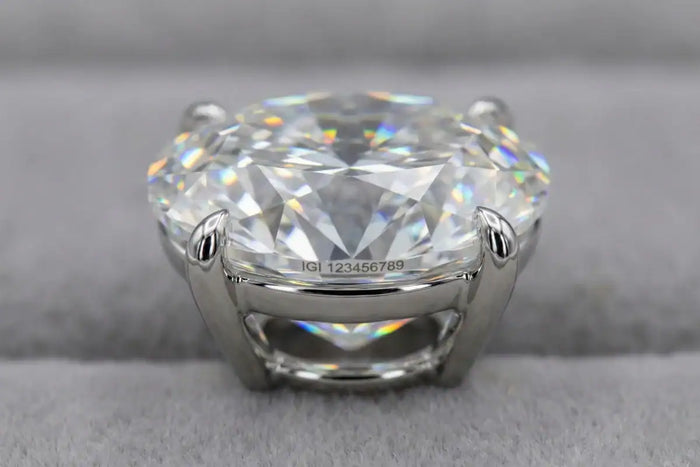
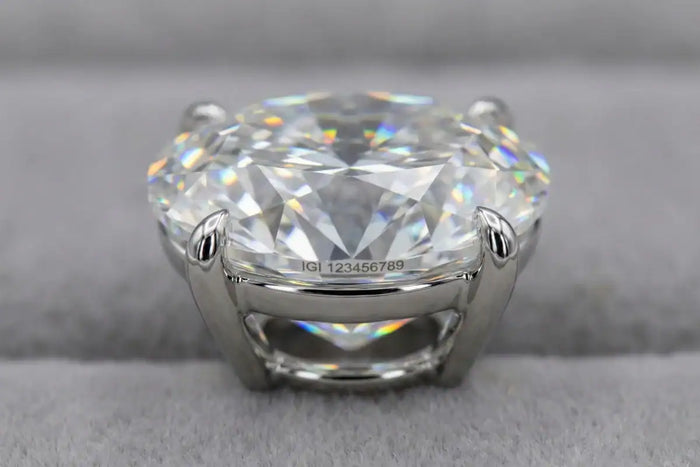
An IGI lab-grown report lists the shape and cutting style, measurements, carat weight, colour, clarity, cut grade for rounds, polish, symmetry, fluorescence, the growth method and any note on post-growth treatment. To verify it, enter the report number on igi.org. A diamond with its own report usually has that number laser inscribed on its girdle. For GIA, use GIA Report Check.
More on choosing a stone in our diamond buying guide, and what each grade costs in our lab-grown diamond price guide.
Frequently Asked Questions
Is IGI or GIA better for lab-grown diamonds?
For comparing lab-grown diamonds, an IGI report tells you more: it gives the exact colour, clarity and cut grade. Since 1 October 2025, GIA rates lab-grown diamonds only as Premium or Standard, so stones of quite different colour can carry the same label. For natural diamonds, GIA still gives full grades.
Does GIA still certify lab-grown diamonds?
Yes. GIA's Laboratory-Grown Diamond Quality Assessment, from 1 October 2025, labels a stone Premium or Standard, or gives no quality assessment if it misses the Standard minimums. It accepts stones from 0.15 carat.
What do GIA Premium and Standard mean?
Premium needs D colour, VVS clarity or better, and excellent polish and symmetry (plus excellent cut for a round). Standard needs E to J colour, VS clarity or better, and very good polish and symmetry (plus very good cut for a round).
Are older GIA lab-grown reports still valid?
Yes. GIA says existing reports for laboratory-grown diamonds remain valid, including those issued with colour and clarity grades before the change.
What does an IGI lab-grown diamond report show?
The shape, measurements, carat weight, colour grade, clarity grade, cut grade for rounds, polish, symmetry and fluorescence, plus the growth method, any note on post-growth treatment, and the laser inscription on the girdle.
How do I verify an IGI report?
Enter the report number on igi.org. A diamond with its own report usually has the number laser inscribed on its girdle, which a jeweller can show you under a loupe.
Do Chaitra diamonds come with an IGI report?
Yes. Every diamond above 0.5 carat has its own IGI report. Smaller diamonds are covered by one IGI report for the whole piece. Our diamonds are E to G colour and VVS to VS clarity.