Lab Grown Diamond Price in India: Complete 2026 Price Guide


By Chaitra Fine Jewels · Updated February 5, 2026 · Bengaluru, India
If you are checking the diamond rate today, the contrast is stark: a high-quality 1-carat natural stone is priced at ₹1,80,000, while the lab grown diamond price in India for identical specs is just ₹45,000.
As we track the diamond price 2026 trends, this 75% price gap is the primary reason Indian consumers are pivoting toward lab-grown solitaires. This guide breaks down the actual market figures, from the general diamond price today to full 2026 rate charts you can use while shopping.
That’s the lab grown diamond price in India reality right now. Same sparkle, same hardness, same fire. 60-70% less cost.
But “₹25,000 to ₹55,000” is a wide range. What actually determines whether you pay ₹25K or ₹55K? This guide breaks down every factor affecting lab grown diamond rates in India, with actual price charts you can use while shopping.
Quick Answer: Diamond Price India 2026 (Lab Grown)
Tracking the diamond price in india 2026 shows that lab-grown stones offer the highest “brilliance-to-cost” ratio. Below is the updated February 2026 rate chart for IGI-certified lab diamonds.
| 0.5 Carat (E/VVS) | ₹12,000 – ₹18,000 |
| 1 Carat (E/VVS) | ₹35,000 – ₹55,000 |
| 1.5 Carat (E/VVS) | ₹50,000 – ₹80,000 |
| 2 Carat (E/VVS) | ₹75,000 – ₹1,20,000 |
| vs Natural Diamond | 60-70% less |
| Certification | IGI certified (same as natural) |
Source: Chaitra Fine Jewels pricing data, February 2026. Prices for loose diamonds, round brilliant cut. Ring settings add ₹15,000-₹40,000 depending on gold weight.
Want to see how a lab grown diamond looks in a finished piece? Try our AI Lookbook to visualise any design on you.
Diamond Price in India 2026: Market Outlook
Before diving into specific rates, it helps to understand the macro-trends affecting the diamond price 2026 market. Lab-grown diamonds now represent nearly 20% of the global market. While the diamond rate today for natural stones is pressured by supply constraints, lab-grown prices have reached an “equilibrium” where production costs and consumer demand have balanced out.
Key Insight: Industry data for February 2026 suggests that while diamond price today for natural stones remains high, lab-grown diamonds have become the “rational default” for the value-driven Indian consumer.
Industry Data: Lab Grown Diamond Market (2024-2025)
| Global market share | 18-20% of diamond jewellery market |
| India lab grown exports growth | +38% year-on-year (GJEPC) |
| Under-35 buyers choosing lab grown | 63% for engagement rings |
| Price decline (2022-2025) | ~30% (production scaling) |
| Price premium vs natural | 60-70% lower for identical specs |
Sources: Bain & Company Global Diamond Report 2024, GJEPC Annual Statistics, AWDC Consumer Survey 2024
According to Bain & Company’s 2024 Global Diamond Report, lab grown diamonds now represent nearly 20% of the global diamond jewellery market, up from under 5% in 2020. The growth has been fastest in the engagement ring category, where younger buyers prioritize size and ethics over origin.
India plays a unique role in this market. GJEPC data shows India cuts and polishes over 90% of the world’s diamonds, both natural and lab grown. This manufacturing expertise means Indian buyers often get better prices than international markets.
Key Finding: Lab grown diamond prices dropped approximately 30% between 2022-2025 according to IDEX price tracking. However, the decline has slowed significantly as prices approach production cost floors. Current prices are near equilibrium.
In This Guide
- Why Lab Grown Diamond Prices Are Where They Are
- Lab Grown Diamond Price in India by Carat Weight
- What Affects Lab Grown Diamond Price
- Price by Diamond Shape
- Lab Grown vs Natural Diamond Price Comparison
- Lab Grown Diamond Jewellery Prices
- Price Trends: Are Lab Grown Diamonds Getting Cheaper?
- Where to Buy Lab Grown Diamonds in India
- How to Get the Best Value
- FAQs
Lab Grown Diamond Price in India by Carat Weight
Carat weight is the biggest price driver. A 2-carat diamond doesn’t cost twice as much as a 1-carat. It costs roughly 2.5-3x more because larger diamonds are harder to grow consistently.
Here’s the current lab grown diamond price chart for India:
Lab Grown Diamond Price Chart India (February 2026)
| Carat Weight | Good Quality (G-H/VS) | Excellent Quality (E-F/VVS) | Premium Quality (D/IF-VVS1) |
|---|---|---|---|
| 0.30 ct | ₹5,000 – ₹7,000 | ₹7,000 – ₹10,000 | ₹10,000 – ₹14,000 |
| 0.50 ct | ₹9,000 – ₹13,000 | ₹12,000 – ₹18,000 | ₹18,000 – ₹25,000 |
| 0.70 ct | ₹15,000 – ₹22,000 | ₹20,000 – ₹30,000 | ₹28,000 – ₹40,000 |
| 1.00 ct | ₹25,000 – ₹38,000 | ₹35,000 – ₹55,000 | ₹50,000 – ₹75,000 |
| 1.50 ct | ₹40,000 – ₹60,000 | ₹50,000 – ₹80,000 | ₹75,000 – ₹1,10,000 |
| 2.00 ct | ₹55,000 – ₹85,000 | ₹75,000 – ₹1,20,000 | ₹1,10,000 – ₹1,60,000 |
| 3.00 ct | ₹1,00,000 – ₹1,50,000 | ₹1,40,000 – ₹2,00,000 | ₹1,90,000 – ₹2,80,000 |
Prices for loose round brilliant cut diamonds with IGI certification. Fancy shapes (oval, pear, emerald) typically cost 10-20% less.
Key Finding: Lab grown diamond prices increase exponentially with carat weight, not linearly. A 2-carat costs 2.5-3x more than a 1-carat, not 2x. This is because larger diamonds require longer growth cycles and have higher rejection rates.
Shop by Carat Weight
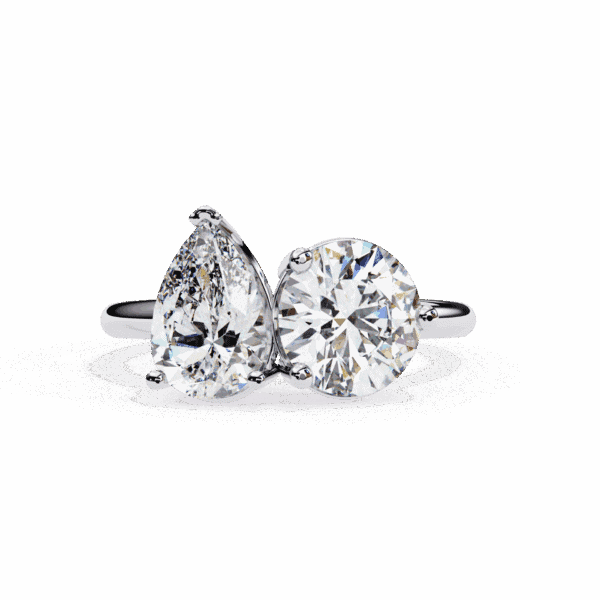
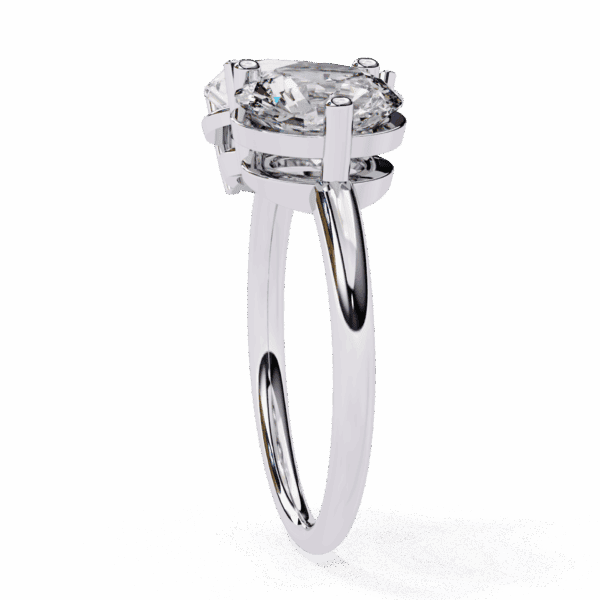
3.75 Carat Pear and Round Cut Toi et Moi Solitaire Ring
Price range: ₹212,009 through ₹261,736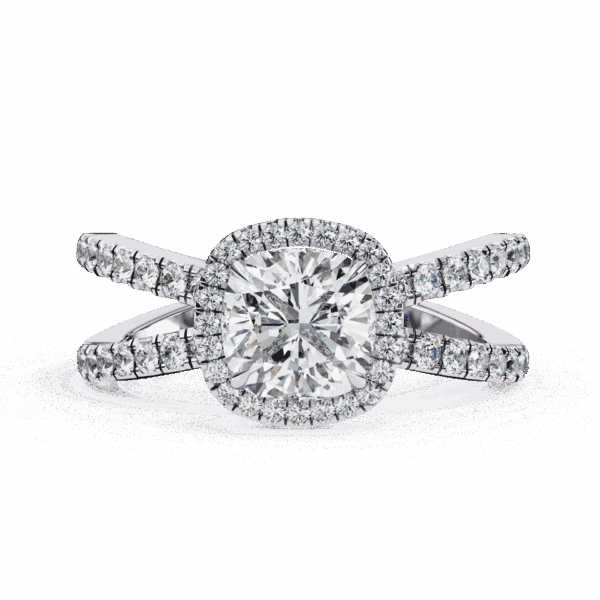
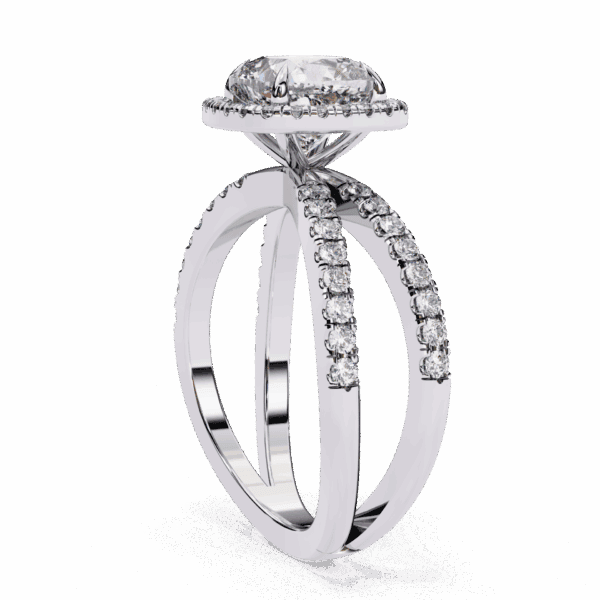
2.25 Carat Cushion Cut Signature Solitaire Ring
Price range: ₹152,565 through ₹217,030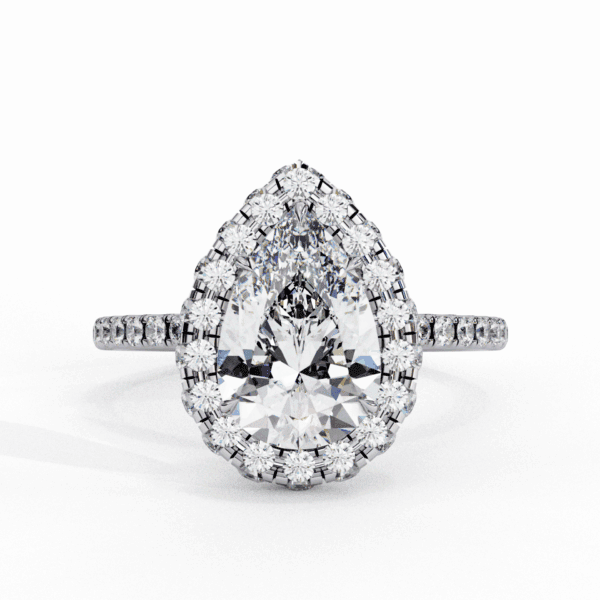
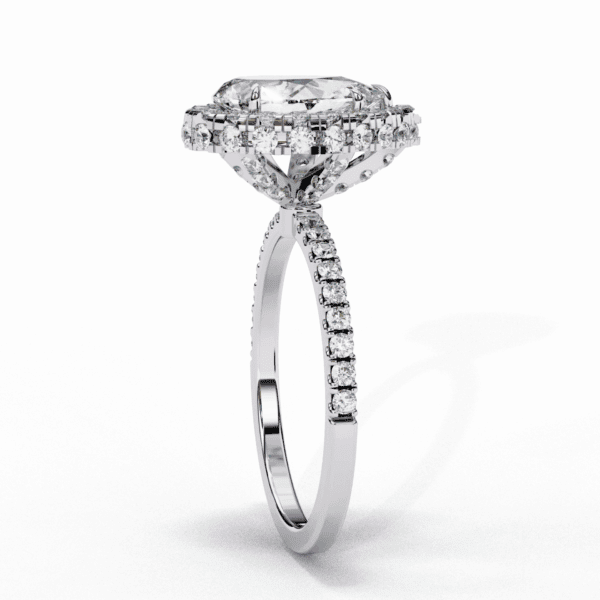
2 Carat Pear Cut Signature Solitaire Ring
Price range: ₹107,639 through ₹157,366What Affects Lab Grown Diamond Price
Two 1-carat lab grown diamonds can differ by ₹30,000 in price. Here’s why:
The 4Cs: Cut, Colour, Clarity, Carat
Every diamond is graded on four factors. Each affects price differently.
Cut (Most Important for Price)
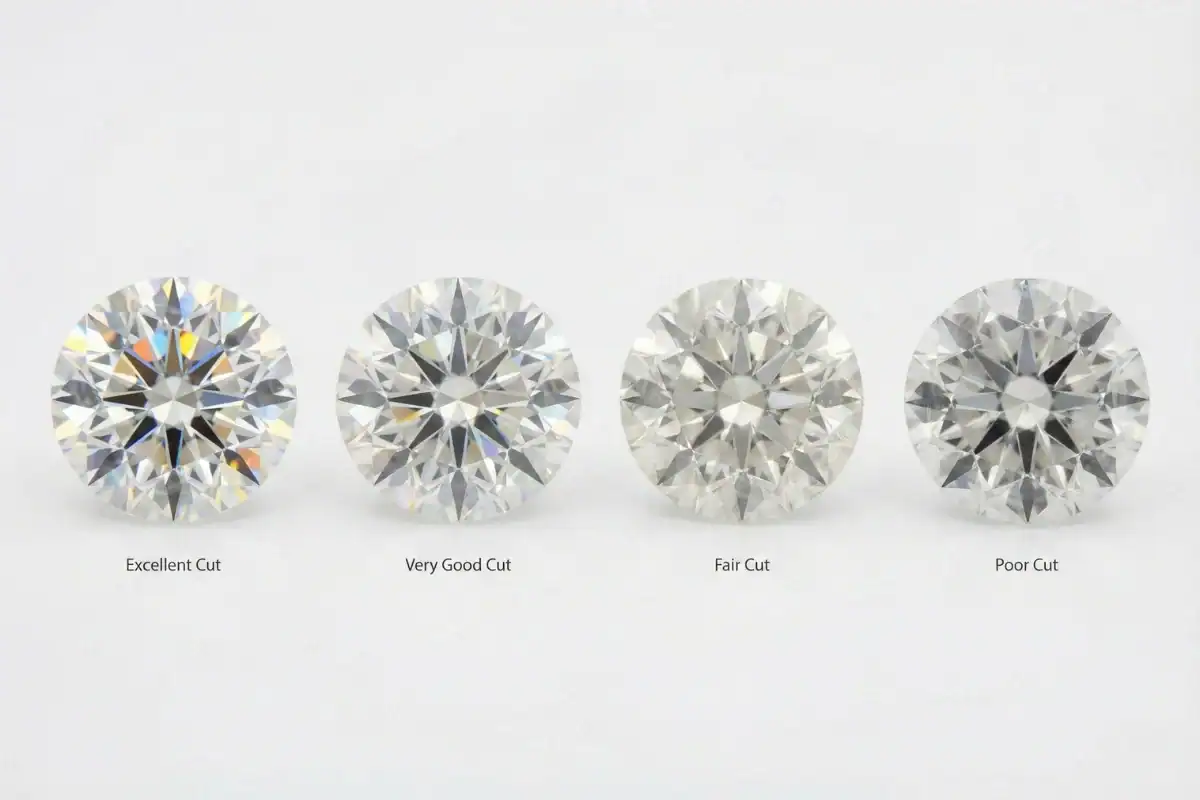
Cut grade has the biggest impact on how a diamond sparkles. An Excellent cut reflects light beautifully. A Good cut looks dull in comparison.
| Cut Grade | Price Impact | Recommendation |
|---|---|---|
| Excellent/Ideal | Baseline (highest) | Always choose this |
| Very Good | 10-15% less | Acceptable for budget |
| Good | 20-30% less | Visible sparkle difference |
| Fair/Poor | 40%+ less | Avoid entirely |
Key Finding: Never compromise on cut grade. A 0.9-carat Excellent cut diamond will look more brilliant than a 1.1-carat Good cut diamond. Cut is the one factor you can see with your naked eye.
Colour (D to Z Scale)
Colour grades how “white” or colourless a diamond appears. D is perfectly colourless. Z has visible yellow tint.
| Colour Grade | Appearance | Price vs D | Recommendation |
|---|---|---|---|
| D-E | Colourless (rare) | Baseline | Premium choice |
| F-G | Near colourless | 15-25% less | Best value (recommended) |
| H-I | Slight warmth | 30-40% less | Good for yellow gold |
| J-K | Noticeable warmth | 45-55% less | Budget option |
For most buyers, E-G colour offers the sweet spot. The difference between E and G is invisible to untrained eyes, but the price difference is significant.
Clarity (FL to I3 Scale)
Clarity grades internal flaws (inclusions) and surface imperfections (blemishes).
| Clarity Grade | What It Means | Price vs IF | Recommendation |
|---|---|---|---|
| IF (Internally Flawless) | No inclusions at 10x | Baseline | Premium (unnecessary) |
| VVS1-VVS2 | Tiny inclusions at 10x | 10-20% less | Excellent choice |
| VS1-VS2 | Minor inclusions at 10x | 25-35% less | Best value (recommended) |
| SI1-SI2 | Noticeable at 10x, may be eye-visible | 40-50% less | Check each stone |
Key Finding: VS1-VS2 clarity is “eye-clean” in 99% of diamonds. This means no visible inclusions without magnification. Paying extra for VVS or IF is paying for something only a gemologist with a loupe can see.
Carat Weight (Size)
We covered this above. The key insight: buying just below “magic numbers” (0.9 instead of 1.0, 1.9 instead of 2.0) saves 10-15% with no visible size difference.
How the 4Cs Combine: Example Pricing
For a 1-carat round lab grown diamond:
| Quality Level | Specs | Price Range |
|---|---|---|
| Budget | 1ct, H colour, VS2, Very Good cut | ₹25,000 – ₹32,000 |
| Best Value | 1ct, F-G colour, VS1-VVS2, Excellent cut | ₹38,000 – ₹48,000 |
| Premium | 1ct, D-E colour, VVS1-IF, Excellent cut | ₹55,000 – ₹75,000 |
At Chaitra, we recommend “Best Value” specs for most buyers. You get a stunning diamond that performs beautifully without paying for imperceptible upgrades.
Lab Grown Diamond Price by Shape
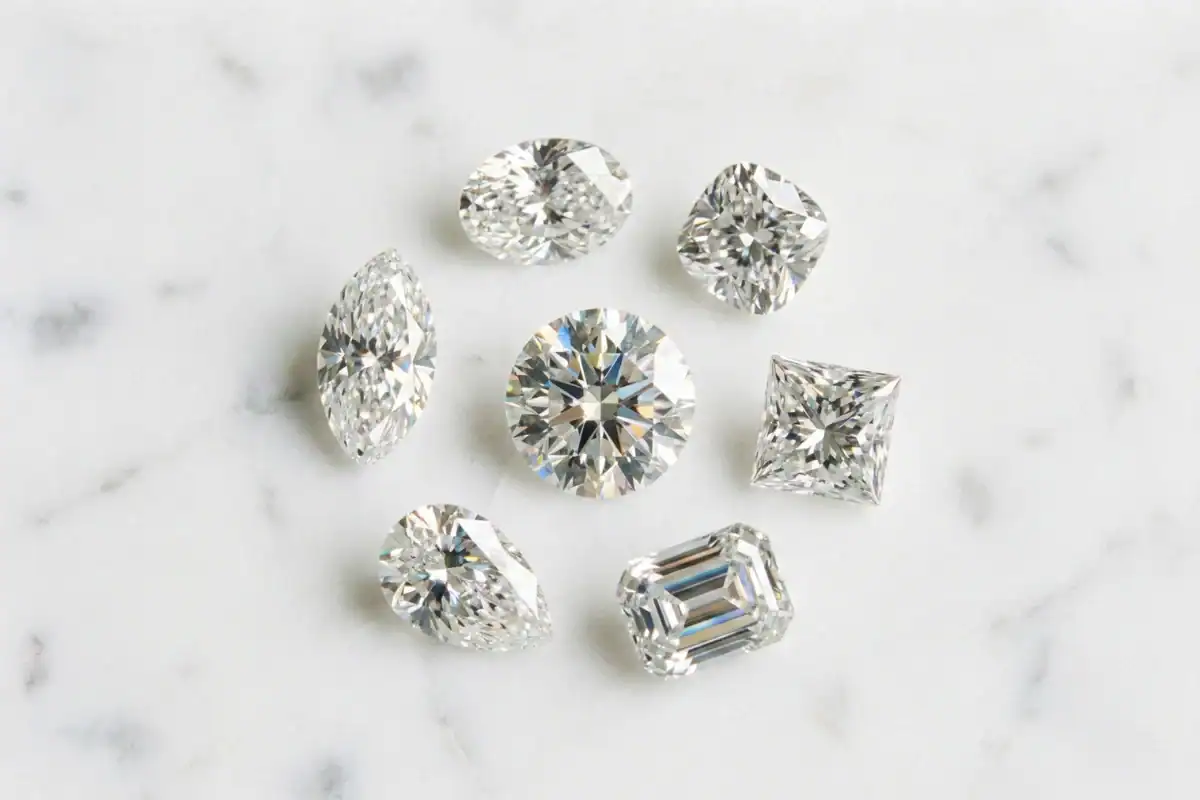
Round brilliant is the most expensive shape. Why? It requires the most rough diamond to be cut away during shaping, losing more material.
Fancy shapes (everything except round) cost 10-25% less for the same carat weight and quality.
Price Comparison by Shape (1 Carat, E/VVS)
| Shape | Price Range | vs Round | Face-Up Size |
|---|---|---|---|
| Round Brilliant | ₹35,000 – ₹55,000 | Baseline | 6.5mm diameter |
| Oval | ₹30,000 – ₹48,000 | 12-15% less | 7.5mm x 5.5mm (looks larger) |
| Cushion | ₹28,000 – ₹45,000 | 15-20% less | 6.5mm x 6.5mm |
| Princess | ₹28,000 – ₹45,000 | 15-20% less | 5.5mm x 5.5mm |
| Emerald | ₹26,000 – ₹42,000 | 18-25% less | 7mm x 5mm |
| Pear | ₹28,000 – ₹46,000 | 15-18% less | 8mm x 5.5mm (looks larger) |
| Marquise | ₹26,000 – ₹42,000 | 18-25% less | 10mm x 5mm (looks much larger) |
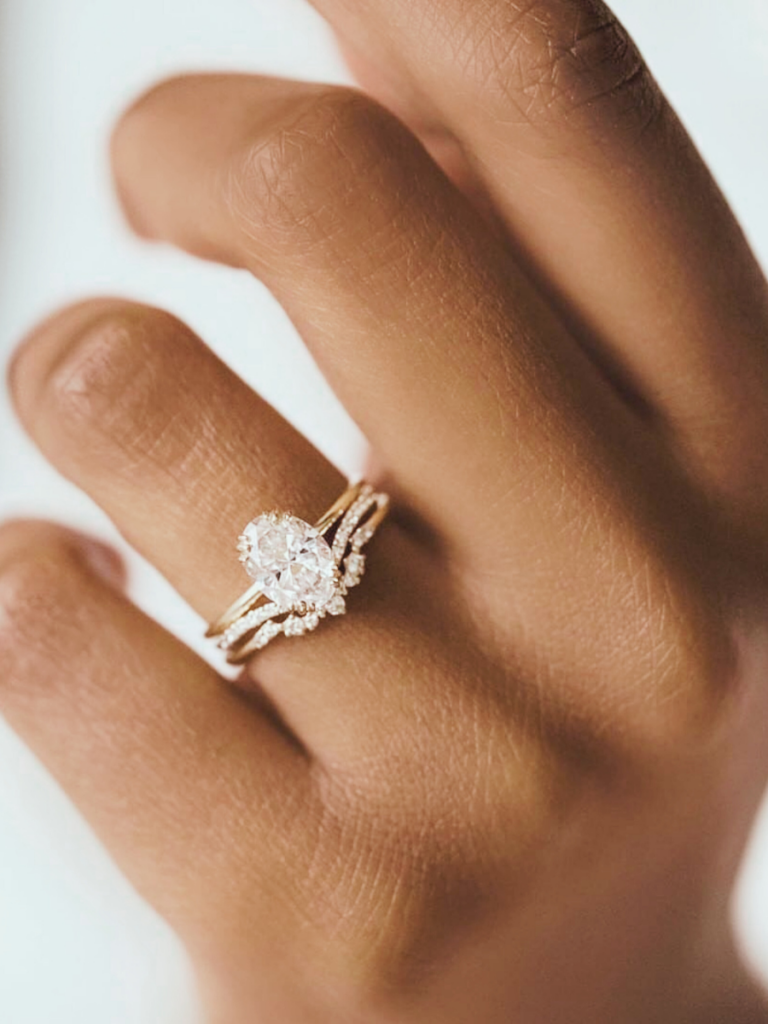
Key Finding: Oval diamonds offer the best value for engagement rings. They cost 12-15% less than rounds while appearing larger due to their elongated shape. A 1-carat oval looks closer to a 1.2-carat round in size.
Shop by Shape
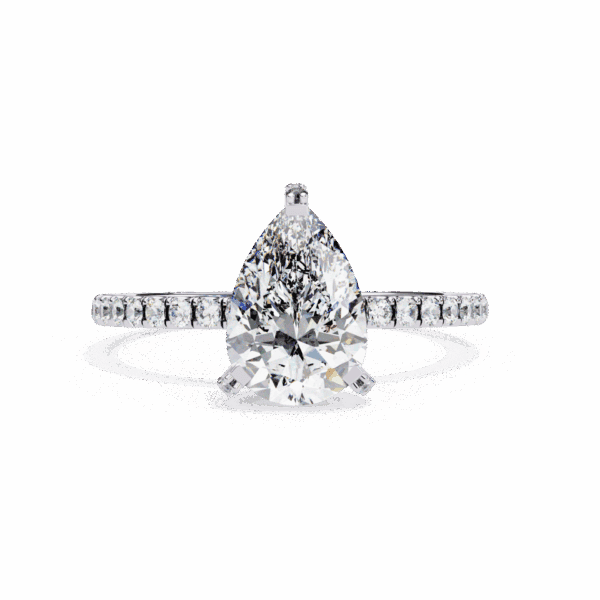
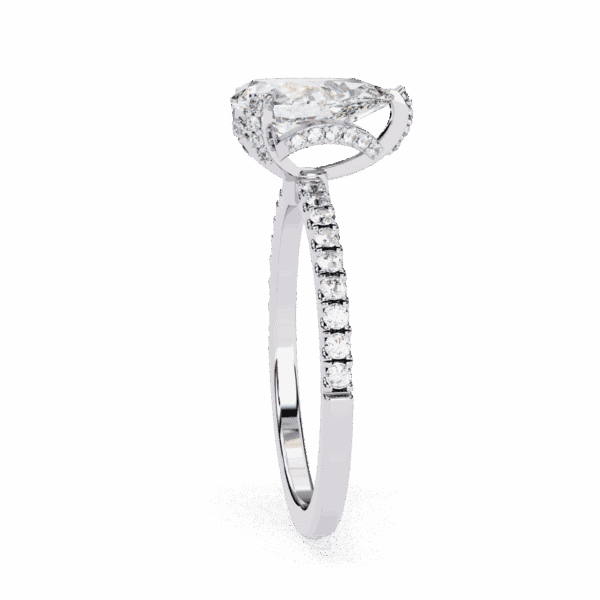
1.5 Carat Pear Cut Solitaire in Hidden Halo
Price range: ₹68,479 through ₹86,438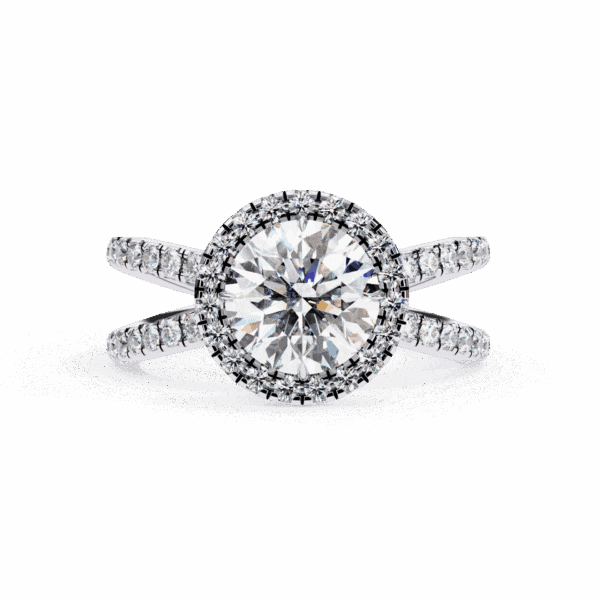
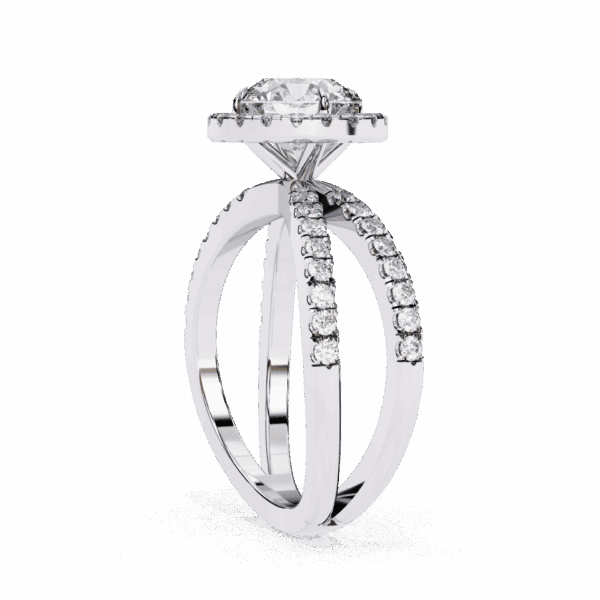
2 Carat Round Cut Signature Solitaire Ring
Price range: ₹135,286 through ₹199,752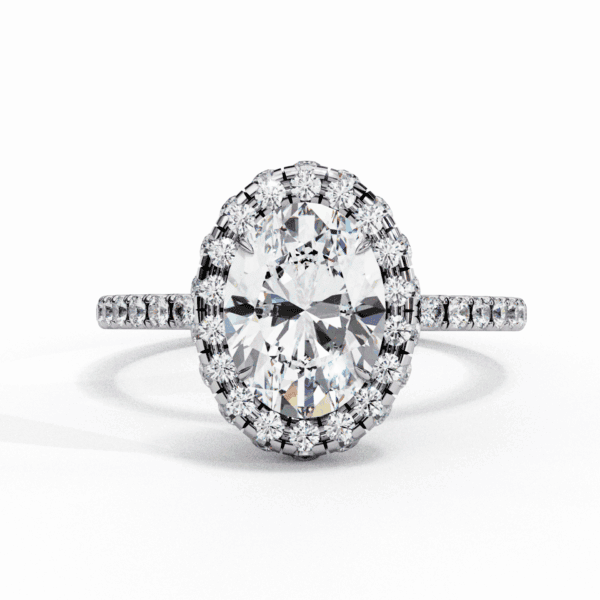
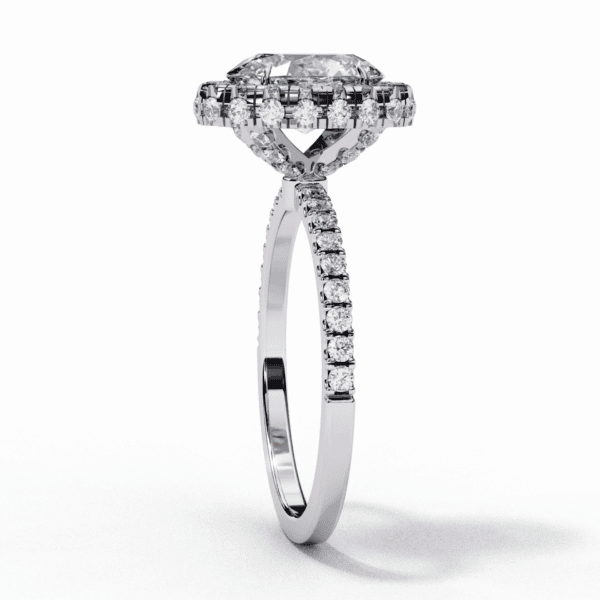
2 Carat Oval Cut Signature Solitaire Ring
Price range: ₹111,313 through ₹150,070Lab Grown vs Natural Diamond Price Comparison
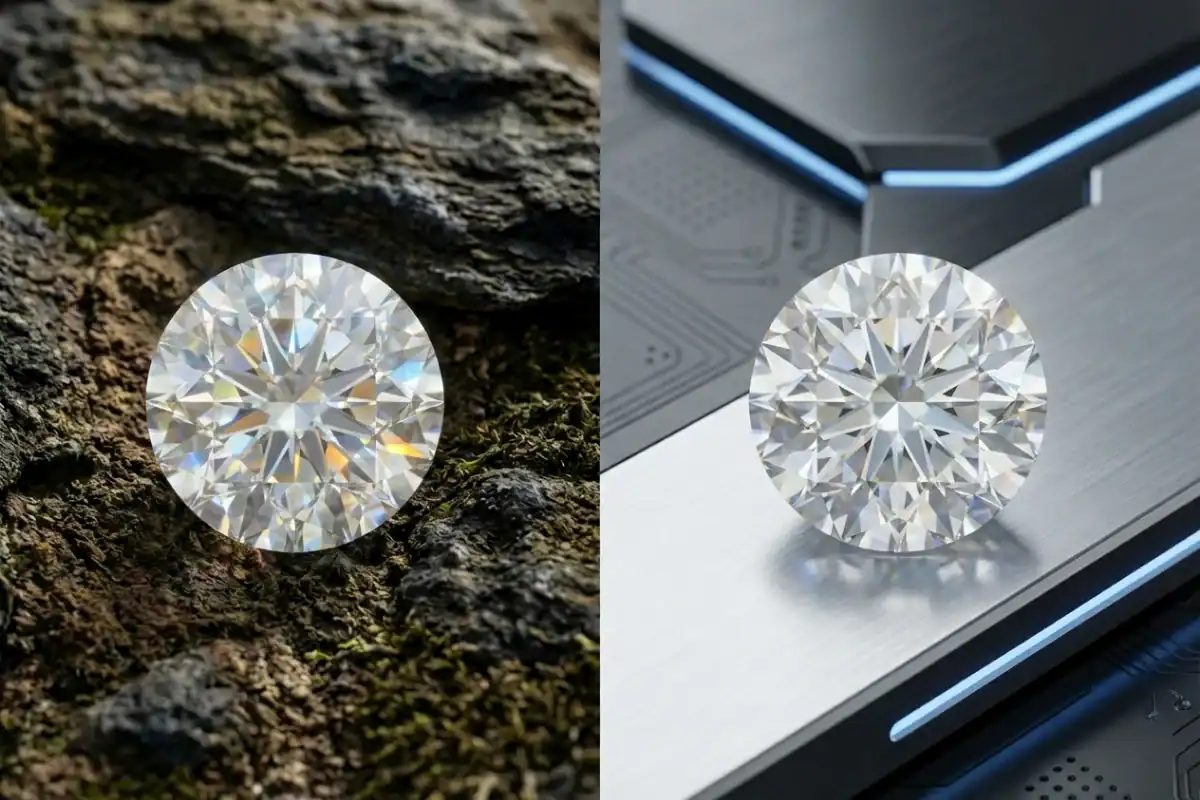
This is where the economics become dramatic. Lab grown diamonds are chemically identical to natural diamonds. Same carbon crystal structure. Same hardness (10 on Mohs scale). Same brilliance, fire, and scintillation.
The only difference is origin. One grew in the earth over millions of years. One grew in a lab over weeks.
The price difference? Substantial.
Price Comparison: Lab Grown vs Natural (E/VVS, Excellent Cut)
| Carat | Lab Grown Price | Natural Price | You Save |
|---|---|---|---|
| 0.5 ct | ₹15,000 | ₹55,000 | ₹40,000 (73%) |
| 1.0 ct | ₹45,000 | ₹1,80,000 | ₹1,35,000 (75%) |
| 1.5 ct | ₹70,000 | ₹3,20,000 | ₹2,50,000 (78%) |
| 2.0 ct | ₹1,00,000 | ₹5,50,000 | ₹4,50,000 (82%) |
| 3.0 ct | ₹1,80,000 | ₹12,00,000+ | ₹10,20,000+ (85%) |
The larger the diamond, the bigger the percentage savings. This is because natural diamond prices increase exponentially with size (rarity premium), while lab grown prices increase more linearly (production cost).
What You Get for the Same Budget
If your budget is ₹1,50,000 for a diamond engagement ring:
| Option | What You Get | Visual Impact |
|---|---|---|
| Natural Diamond | 0.7ct, H colour, VS2, 14K gold | Small, slightly warm |
| Lab Grown Diamond | 1.8ct, E colour, VVS1, 18K gold | Large, white, brilliant |
Same budget. Dramatically different ring. This is why 63% of engagement ring buyers under 35 in India now choose lab grown.
Lab Grown Diamond Jewellery Prices in India
Loose diamond prices are one thing. What about finished jewellery?
Final price = Diamond cost + Gold cost + Making charges + GST (3%)
Lab Grown Diamond Ring Prices
| Ring Type | Diamond Specs | 14K Gold | 18K Gold |
|---|---|---|---|
| Solitaire Ring | 0.5ct E/VVS | ₹35,000 – ₹45,000 | ₹42,000 – ₹55,000 |
| Solitaire Ring | 1ct E/VVS | ₹55,000 – ₹75,000 | ₹65,000 – ₹90,000 |
| Solitaire Ring | 1.5ct E/VVS | ₹80,000 – ₹1,10,000 | ₹95,000 – ₹1,30,000 |
| Solitaire Ring | 2ct E/VVS | ₹1,10,000 – ₹1,50,000 | ₹1,30,000 – ₹1,80,000 |
| Toi et Moi Ring | 1ct total (2 stones) | ₹65,000 – ₹85,000 | ₹78,000 – ₹1,00,000 |
| Three-Stone Ring | 1.5ct total | ₹75,000 – ₹1,00,000 | ₹90,000 – ₹1,20,000 |
Lab Grown Diamond Earring Prices
| Earring Type | Diamond Specs | 14K Gold | 18K Gold |
|---|---|---|---|
| Stud Earrings | 0.5ct pair (0.25ct each) | ₹22,000 – ₹30,000 | ₹28,000 – ₹38,000 |
| Stud Earrings | 1ct pair (0.5ct each) | ₹38,000 – ₹52,000 | ₹48,000 – ₹65,000 |
| Stud Earrings | 2ct pair (1ct each) | ₹85,000 – ₹1,15,000 | ₹1,00,000 – ₹1,35,000 |
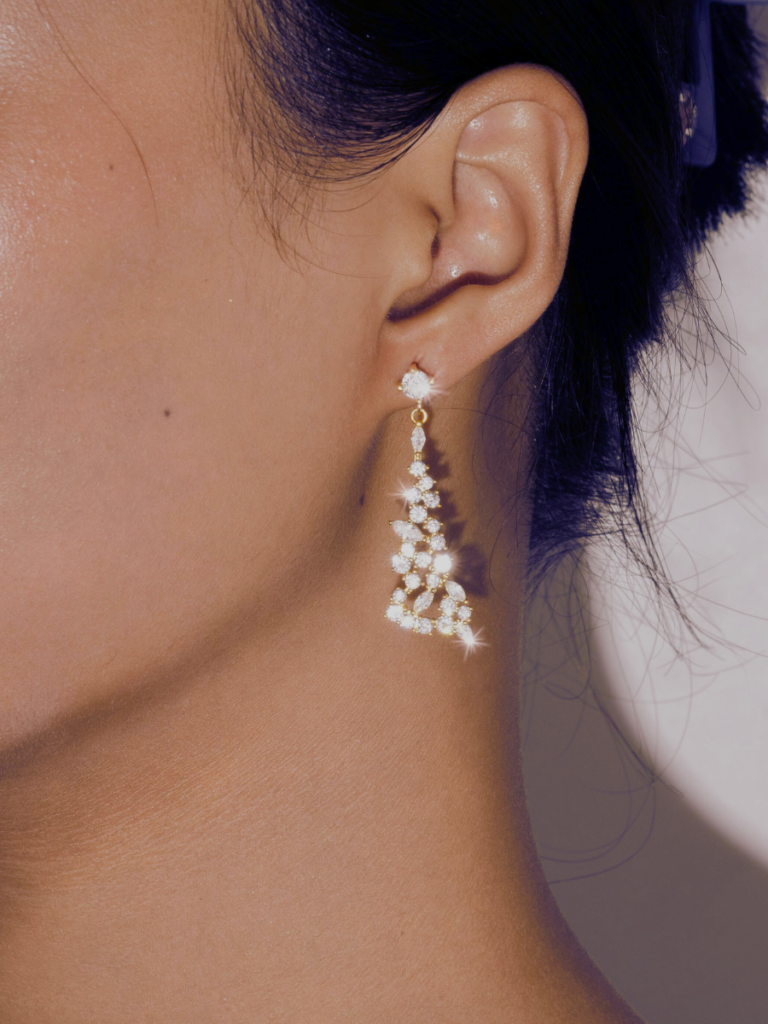
| Drop Earrings | 1ct total | ₹50,000 – ₹70,000 | ₹62,000 – ₹85,000 |
Lab Grown Diamond Pendant Prices
| Pendant Type | Diamond Specs | 14K Gold | 18K Gold |
|---|---|---|---|
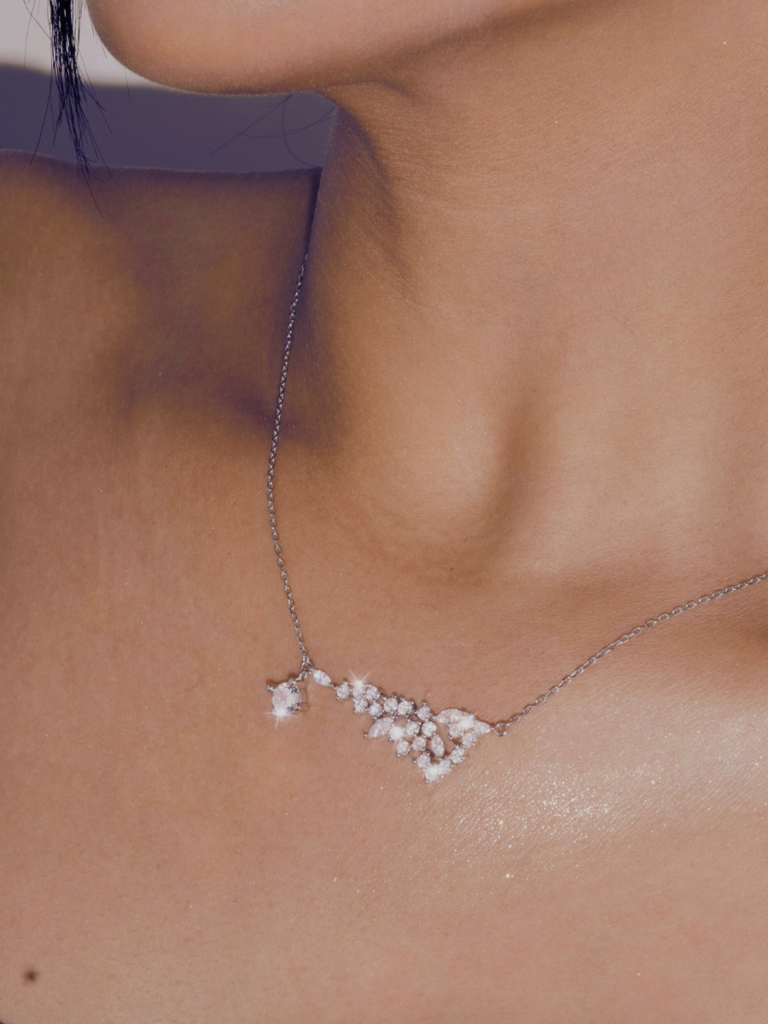
| Solitaire Pendant | 0.5ct E/VVS | ₹28,000 – ₹38,000 | ₹35,000 – ₹48,000 |
| Solitaire Pendant | 1ct E/VVS | ₹50,000 – ₹68,000 | ₹62,000 – ₹82,000 |
| Halo Pendant | 0.7ct centre + 0.3ct halo | ₹45,000 – ₹60,000 | ₹55,000 – ₹75,000 |
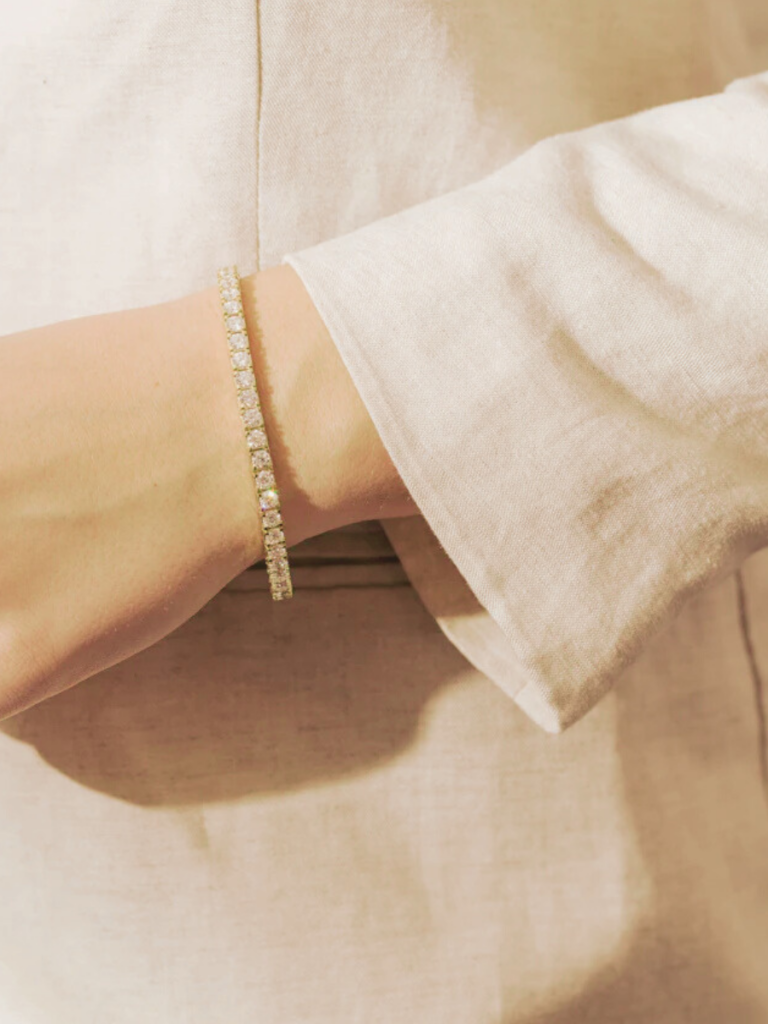
Lab Grown Tennis Bracelet Prices
| Total Carat Weight | 14K Gold | 18K Gold |
|---|---|---|
| 3ct total | ₹1,20,000 – ₹1,50,000 | ₹1,45,000 – ₹1,80,000 |
| 5ct total | ₹1,80,000 – ₹2,30,000 | ₹2,15,000 – ₹2,80,000 |
| 7ct total | ₹2,50,000 – ₹3,20,000 | ₹3,00,000 – ₹3,90,000 |
All prices include IGI certified diamonds and BIS hallmarked gold. Prices vary based on exact specifications and gold rates at time of purchase.
Shop Lab Grown Diamond Jewellery
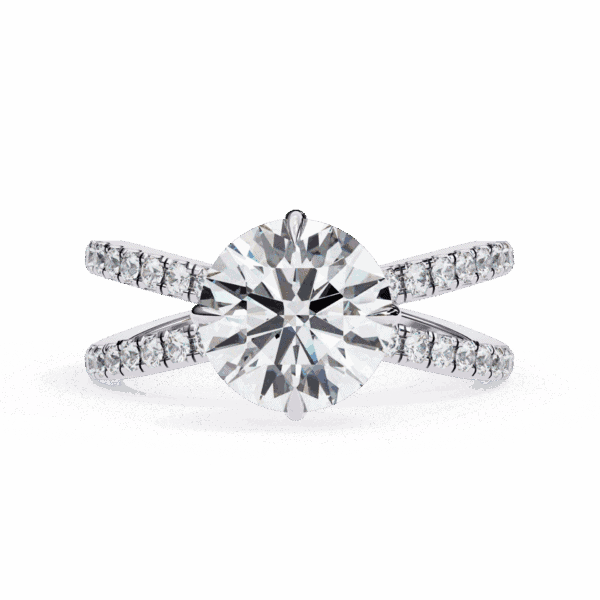
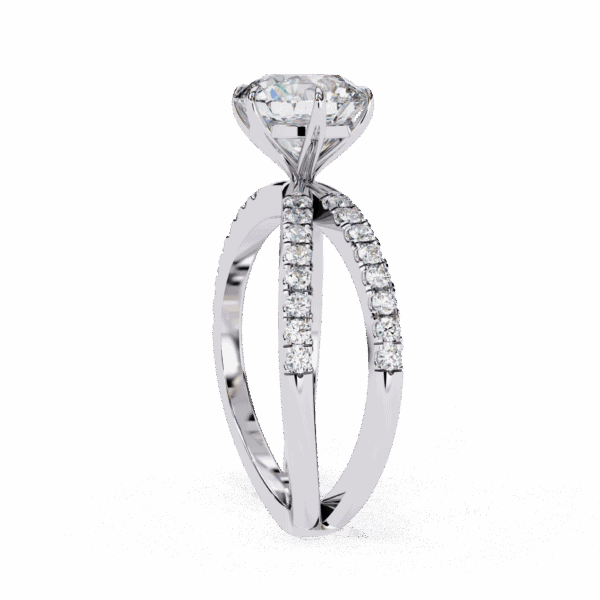
2.25 Carat Round Cut Endless Promise Solitaire Ring
Price range: ₹152,530 through ₹213,885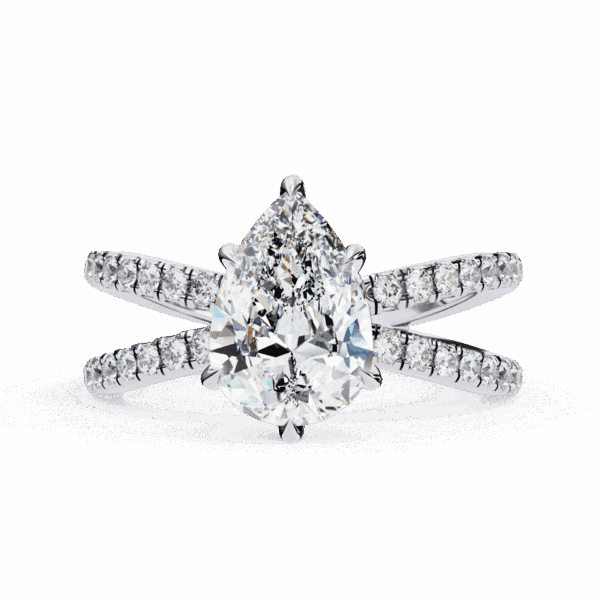
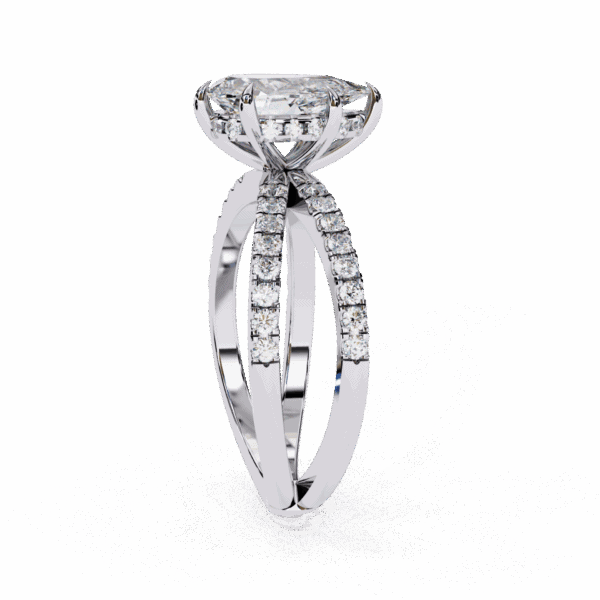
2.25 Carat Pear Cut Eternal Spark Solitaire Ring
Price range: ₹149,457 through ₹210,265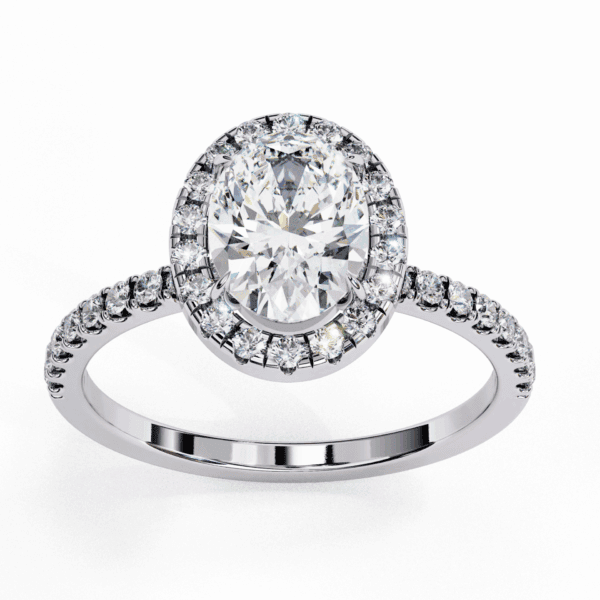
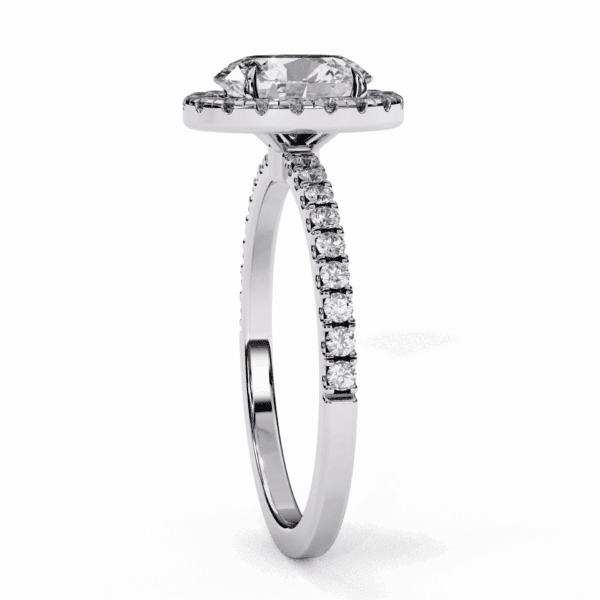
1.5 Carat Oval Cut Forever Solitaire Engagement Ring
Price range: ₹80,562 through ₹115,660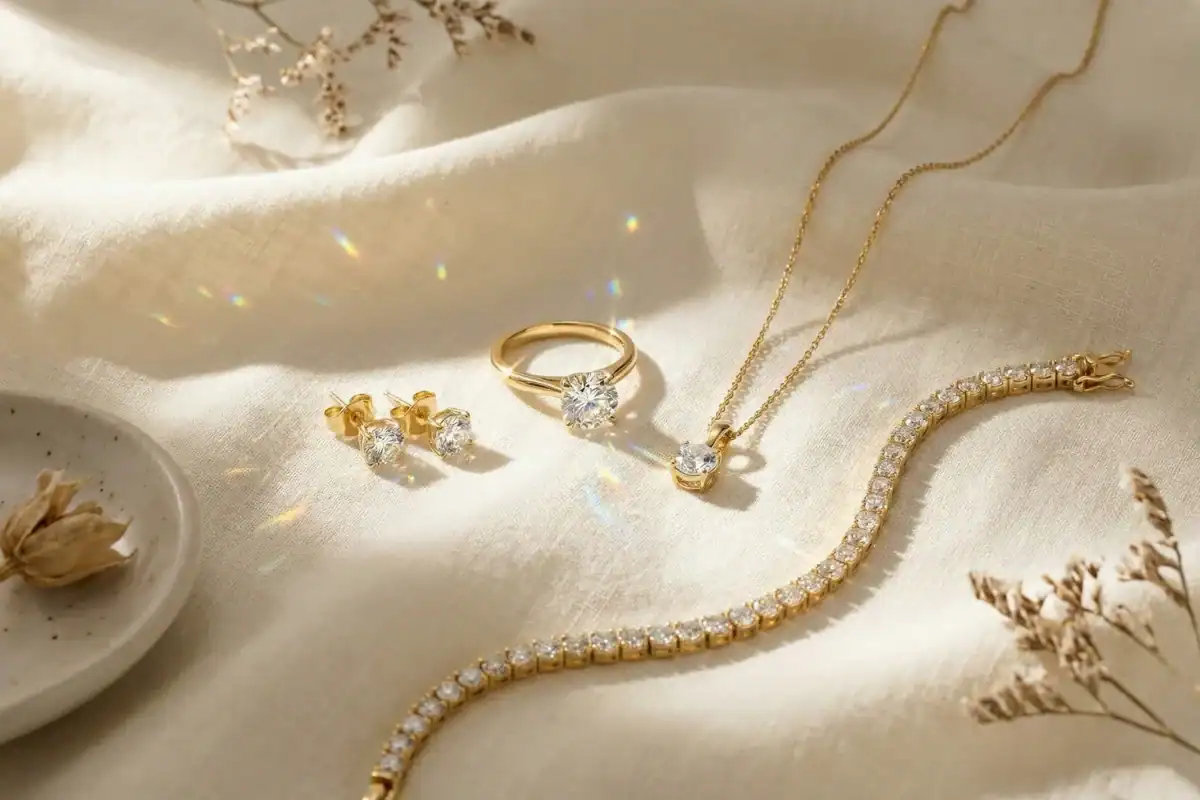
Price Trends: Are Lab Grown Diamonds Getting Cheaper?
Yes. Lab grown diamond prices have dropped approximately 30% over the past 3 years. And they’ll likely continue declining, though more slowly.
According to Bain & Company’s analysis, three factors drove the decline:
- Production scaling: Global lab grown production capacity increased 4x between 2020-2024. More supply means lower prices.
- Technology improvements: CVD (Chemical Vapor Deposition) processes became more efficient, reducing cost per carat by an estimated 15-20% annually.
- Competition: New manufacturers entering the market, particularly in India and China, intensified price competition.
Historical Price Trend (1ct E/VVS Round)
| Year | Approximate Price | Change |
|---|---|---|
| 2022 | ₹65,000 – ₹80,000 | Baseline |
| 2023 | ₹50,000 – ₹65,000 | -20% |
| 2024 | ₹40,000 – ₹55,000 | -15% |
| 2025 | ₹35,000 – ₹50,000 | -8% |
| 2026 (current) | ₹35,000 – ₹55,000 | Stabilizing |
Price estimates based on IDEX diamond price indices and Chaitra market data.
Should You Wait for Prices to Drop Further?
Probably not. Industry analysts at Bain project price declines slowing to 5-8% annually as the market reaches equilibrium. We’ve passed the steepest part of the decline curve.
The math: waiting 12 months might save ₹3,000-5,000 on a ₹50,000 diamond. If you’re buying for a specific occasion, that saving rarely justifies the wait.
Key Finding: According to industry data tracked by IDEX and Bain & Company, lab grown diamond prices dropped 30% from 2022-2025 but the decline rate has slowed from 20% annually to under 10%. Current prices are approaching production cost floors where further significant drops become unlikely.
Where to Buy Lab Grown Diamonds in India
Online Specialists (Best Value)
Brands like Chaitra that focus exclusively on lab grown diamonds typically offer the best prices. Lower overhead means lower markups. You’re buying from specialists who understand the category deeply.
At Chaitra, every piece comes with:
- IGI certification for every diamond
- BIS hallmarking for all gold
- Complete price breakdown (diamond + gold + making + GST)
- 30-day free returns
- Lifetime exchange
- Lifetime buyback
- Free shipping across India
Traditional Jewellers
Tanishq, Kalyan, Malabar Gold now carry lab grown options. Selection is limited compared to specialists. Prices tend to be 15-25% higher due to retail overhead. But you get the in-store experience if that matters to you.
Surat Direct
Buying loose stones directly from Surat manufacturers offers the lowest prices. But you need to know what you’re doing. No certification guarantees, no return policies, no finished jewellery. Only recommended if you have a trusted contact in the trade.
What to Verify Before Buying
- IGI or GIA certification: Every diamond above 0.3ct should have independent certification
- BIS hallmark: Look for the stamp on gold showing purity and jeweller ID
- Return policy: Minimum 14 days, ideally 30
- Price breakdown: You should see diamond cost, gold cost, making charges separately
How to Get the Best Value
Smart buying can save you 20-30% without sacrificing quality. Here’s how:
1. Buy Just Below Magic Numbers
Diamond prices jump at round numbers: 0.5ct, 1ct, 1.5ct, 2ct. A 0.95ct diamond costs 10-15% less than a 1.0ct with no visible size difference.
2. Choose F-G Colour Over D-E
The colour difference between D and G is invisible to 95% of people. The price difference is 20-25%.
3. Go VS1-VS2 Clarity
You’re paying for invisible differences with VVS or IF clarity. VS is “eye-clean” and looks identical when worn.
4. Never Compromise Cut
This is the one place to insist on Excellent. Cut is the only factor you can see with your naked eye.
5. Consider Fancy Shapes
Ovals, cushions, and emeralds cost 15-25% less than rounds. Ovals especially look larger than their carat weight suggests.
6. Compare Total Value, Not Just Diamond Price
A ₹40,000 loose diamond with ₹20,000 in hidden making charges costs more than a ₹55,000 ring with transparent pricing.
Our Bestseller: 1ct Oval Solitaire

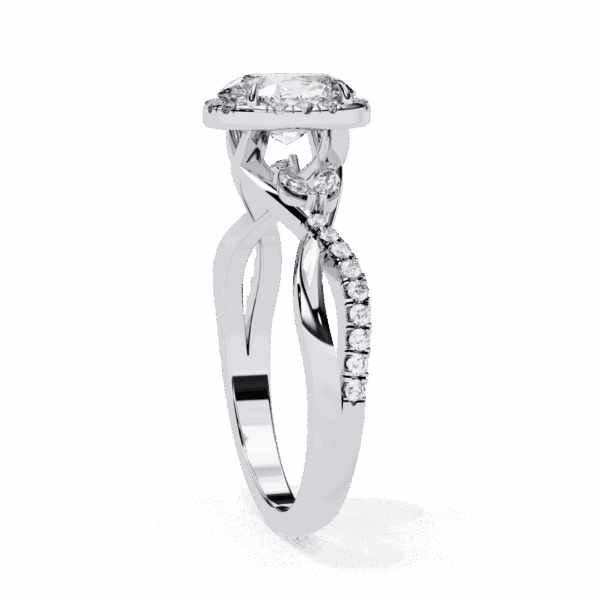
1 Carat Oval Cut Solitaire in Halo Setting
Price range: ₹80,507 through ₹134,821About This Data
Prices in this guide reflect Chaitra Fine Jewels’ lab grown diamond inventory as of February 2026. All diamonds are IGI (International Gemological Institute) certified. Gold prices are based on BIS hallmarked 14K and 18K rates. Jewellery prices include setting, making charges, and GST. Market trend data sourced from Bain & Company’s 2024 Global Diamond Report, GJEPC export statistics, and IDEX diamond price indices. Natural diamond prices sourced from industry benchmarks. This guide is updated monthly to reflect current market rates.
Frequently Asked Questions
What is the price of a 1 carat lab grown diamond in India?
A 1-carat lab grown diamond costs between ₹25,000 and ₹55,000 in India depending on quality. Good quality (H/VS) starts around ₹25,000-35,000. Excellent quality (E-F/VVS) ranges from ₹35,000-55,000. Premium quality (D/IF) can reach ₹55,000-75,000. All prices for loose IGI certified diamonds.
Are lab grown diamonds cheaper than natural diamonds?
Yes, lab grown diamonds cost 60-70% less than natural diamonds of identical quality. A 1-carat E/VVS lab grown costs around ₹45,000 while the same natural diamond costs ₹1,80,000+. The savings increase with larger carat weights. Lab grown and natural are chemically identical.
Why are lab grown diamond prices different from store to store?
Price variations come from quality differences (cut, colour, clarity), certification (IGI vs uncertified), retail margins, and making charges. Online specialists typically offer 15-25% lower prices than traditional jewellers due to lower overhead. Always compare specifications, not just prices.
Is lab grown diamond a good investment?
Lab grown diamonds are not an investment in the traditional sense. They don’t appreciate in value like some natural diamonds. However, they offer excellent value for jewellery. Buy for wearing and the emotional value, not as a financial investment. Chaitra offers lifetime buyback for those who want resale options.
What is the lab grown diamond rate per carat?
Lab grown diamond rates range from ₹15,000 to ₹80,000+ per carat depending on quality. Good quality (G-H/VS) averages ₹25,000-40,000 per carat. Excellent quality (E-F/VVS) averages ₹40,000-60,000 per carat. Premium (D/IF) can exceed ₹70,000 per carat. Prices decrease per carat for larger stones.
How can I verify lab grown diamond prices?
Check IGI or GIA certification first. This confirms the 4Cs (cut, colour, clarity, carat) that determine price. Compare prices for identical specifications across multiple sellers. Be wary of uncertified diamonds or prices significantly below market. Ask for complete price breakdown showing diamond, gold, and making charges.
Do lab grown diamond prices change with gold rates?
Loose diamond prices don’t change with gold rates. But finished jewellery prices do. Gold typically represents 20-40% of a ring’s total cost depending on design. When gold rates rise, jewellery prices increase proportionally. At Chaitra, our T+1 pricing locks your gold rate the day after ordering.
What’s the cheapest carat size that looks impressive?
0.7-0.9 carat offers the best balance of visual impact and value. This size looks substantial on most hand sizes while staying under the 1-carat price premium. An oval or pear in this range appears even larger due to elongated shapes. Budget around ₹50,000-70,000 for a complete ring in this range.
Why do oval diamonds cost less than round?
Round brilliant cutting wastes more rough diamond material. About 60% of the rough is lost to cutting a round versus 45-50% for ovals. Less waste means lower cost. Additionally, round commands a premium as the most popular shape. Ovals cost 12-15% less while appearing 10-15% larger face-up.
Are Surat lab grown diamonds cheaper?
Direct Surat purchases can be 15-30% cheaper for loose stones. However, you lose certification guarantees, return policies, and after-sales support. Finished jewellery from Surat wholesalers lacks quality control and BIS hallmarking verification. Recommended only for trade buyers, not consumers.
What’s included in lab grown diamond jewellery price?
Complete jewellery price includes: diamond cost, gold cost (based on weight and purity), making/setting charges, and GST (3%). At Chaitra, we show the full breakdown on every product page. Beware of “diamond price only” quotes that hide high making charges. Ask for total landed cost.
How much does a lab grown diamond engagement ring cost in India?
Lab grown diamond engagement rings in India range from ₹35,000 to ₹3,00,000+. A 0.5ct solitaire starts around ₹35,000-45,000. A 1ct solitaire costs ₹55,000-90,000. A 2ct statement ring ranges from ₹1,10,000-1,80,000. All prices for IGI certified diamonds in 14K-18K gold. Shop engagement rings.
Do lab grown diamonds hold value?
Lab grown diamonds have limited resale value compared to natural diamonds. Resale typically returns 20-40% of purchase price. However, since lab grown costs 60-70% less upfront, your absolute loss is similar or less than natural diamonds. Focus on enjoyment value, not investment value.
What certification should I look for?
IGI (International Gemological Institute) is the most common and respected certification for lab grown diamonds. GIA also certifies lab grown. Both grade using identical standards as natural diamonds. Never buy uncertified diamonds above 0.3ct. Certification confirms quality and whether the diamond is natural or lab grown.
Can I negotiate lab grown diamond prices?
Traditional jewellers may offer 5-15% negotiation room. Online brands typically have fixed pricing but better base prices. Negotiation rarely applies to certified diamonds with transparent pricing. Instead of negotiating, compare total value across sellers. Better quality at the same price beats a discount on inferior quality.
Ready to Buy?
Lab grown diamonds offer the same beauty as natural diamonds at 60-70% lower prices. Whether you’re shopping for an engagement ring, anniversary gift, or self-purchase, you now have the pricing context to buy confidently.
At Chaitra, every diamond is IGI certified, every setting is BIS hallmarked, and every price is transparent. We show you exactly what you pay for. And with lifetime exchange, lifetime buyback, and 30-day returns, your purchase is protected.
See how any piece looks on you with our AI Lookbook before you buy.
3.75 Carat Pear and Round Cut Toi et Moi Solitaire Ring
Price range: ₹212,009 through ₹261,736 2.25 Carat Cushion Cut Signature Solitaire Ring
Price range: ₹152,565 through ₹217,030 2 Carat Pear Cut Signature Solitaire Ring
Price range: ₹107,639 through ₹157,366
Explore Collection
Book Free Consultation
Or reach us directly: WhatsApp | +91 90199 21267
About the Author: This guide is written and maintained by the Chaitra Fine Jewels team, Bengaluru. We specialize in IGI-certified lab-grown diamond jewellery since 2022. For questions about pricing or custom designs, book a consultation or reach us on WhatsApp.