The Complete Diamond Buying Guide (2026)

By Chaitra Fine Jewels · Updated January 5, 2026 · Bengaluru, India
This diamond buying guide is for everyone who’s ever felt overwhelmed walking into a jewellery store. Buying a diamond should feel exciting, not like an exam you didn’t study for.
Carat. Clarity. Cut. Colour. Certifications. Lab-grown. Natural. 14K. 18K. The jargon piles up. The salesperson talks fast. And somewhere between “VVS1” and “excellent cut,” you start nodding along, pretending you understand.
You’re not alone. Even seasoned diamond buyers feel this way.
This guide is here to change that. No jargon. No pressure. Just the essentials explained simply so you can walk into any jewellery store or browse online knowing exactly what to look for.
Quick Answer: Diamond Buying Priority (2026)
| 1. Cut (Most Important) | Always Excellent or Very Good |
| 2. Colour | D-H range (colourless to near colourless) |
| 3. Clarity | VS1 or VS2 (best value) |
| 4. Carat | Adjust based on budget |
| Lab-grown vs Natural | Lab-grown: 60-70% less cost, same quality |
| Certification | Always IGI or GIA certified |
Source: Chaitra Fine Jewels diamond buying guide, January 2026. Based on IGI grading standards.
Want to see how a diamond ring looks on you before buying? Try our AI Lookbook to visualise any piece styled on your photo.
In This Guide
- The 4Cs: Diamond Buying Guide Essentials
- Quick Reference: What to Look For
- The Priority Order
- Lab-Grown vs Natural
- Certifications: Your Proof of Quality
- Gold Purity: 14K vs 18K vs 22K
- Budget Guide: What to Expect
- How to Get the Best Value
- FAQs
The 4Cs: Your Diamond Buying Guide Essentials
Every diamond is graded on four things: Cut, Clarity, Colour, and Carat. These are called the 4Cs, and understanding them is the foundation of smart diamond buying.
1. Cut — The Most Important C
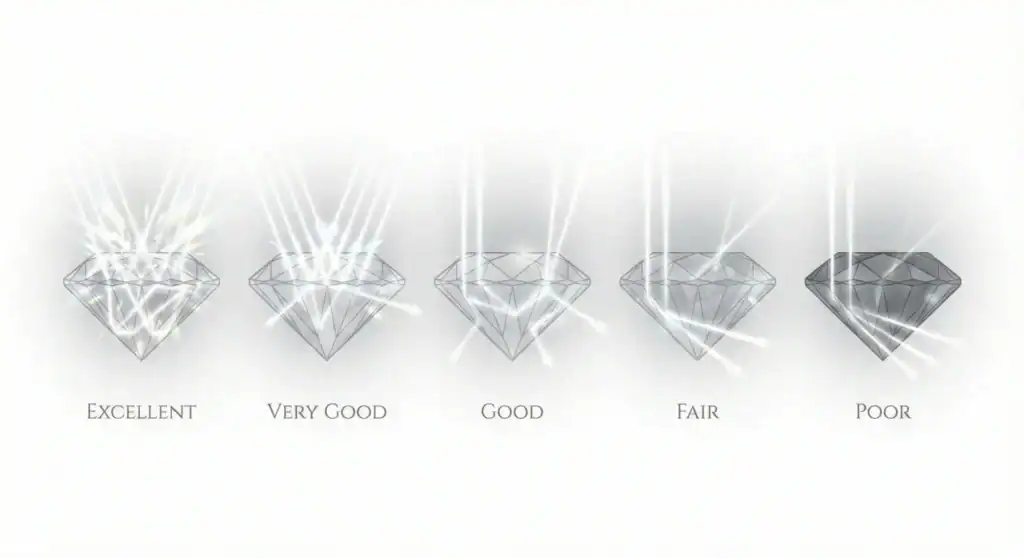
Cut determines how a diamond sparkles. A well-cut diamond reflects light beautifully. A poorly cut one looks dull, no matter how big or clear it is.
Cut grades range from Excellent to Poor. Always prioritise Excellent or Very Good. This is where you should never compromise.
Key Finding: Cut is the only C you should never compromise on. A well-cut 0.8 carat diamond will outsparkle a poorly cut 1.2 carat diamond every single time.
2. Clarity — The Flaws You Can’t See
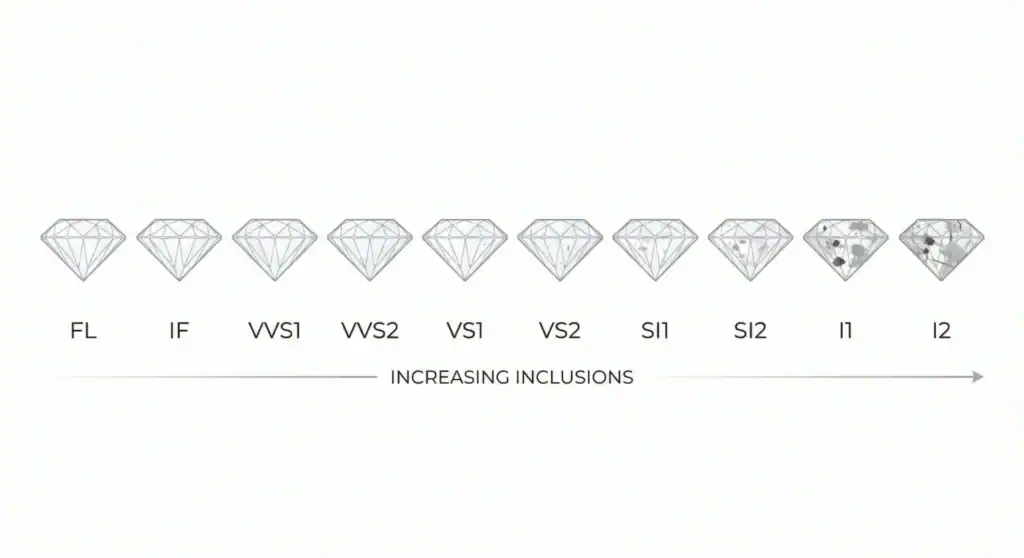
Clarity measures tiny imperfections (called inclusions) inside the diamond. Grades range from Flawless (FL) to Included (I).
Here’s the secret: you don’t need Flawless. Most inclusions are invisible to the naked eye. A VS1 or VS2 diamond looks identical to a Flawless one, but costs significantly less.
Clarity grades (highest to lowest):
FL → IF → VVS1 → VVS2 → VS1 → VS2 → SI1 → SI2 → I1 → I2 → I3
Key Finding: VS1 and VS2 clarity diamonds look identical to Flawless diamonds to the naked eye, but cost 30-50% less. You’re paying extra for flaws you literally cannot see without 10x magnification.
3. Colour — The Less, The Better
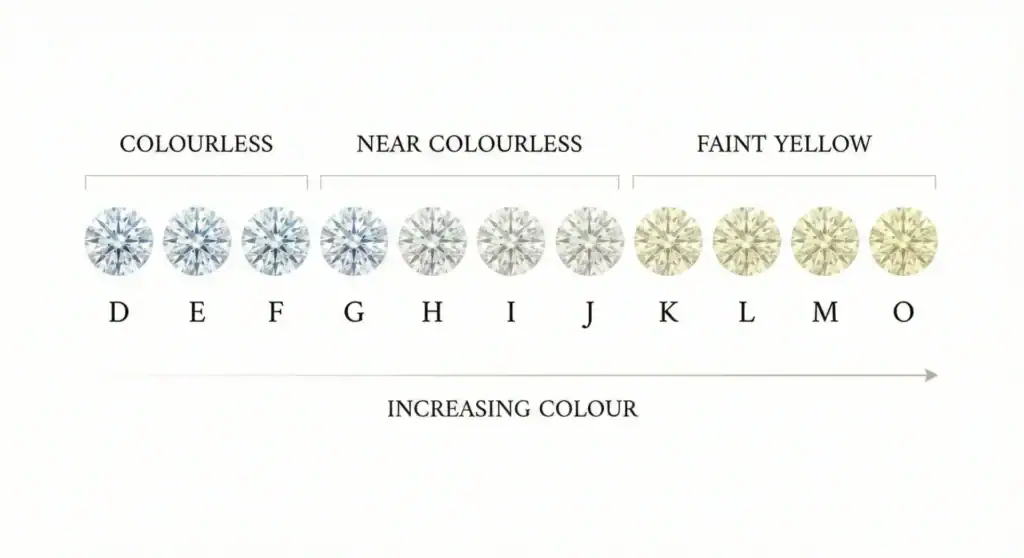
Diamond colour is graded from D (colourless) to Z (yellow tint). The closer to D, the more valuable.
For most buyers, diamonds in the D-F range (colourless) or G-H range (near colourless) look stunning. Below that, you may start noticing a faint yellow tone, especially in white gold or platinum settings.
4. Carat — Size Isn’t Everything
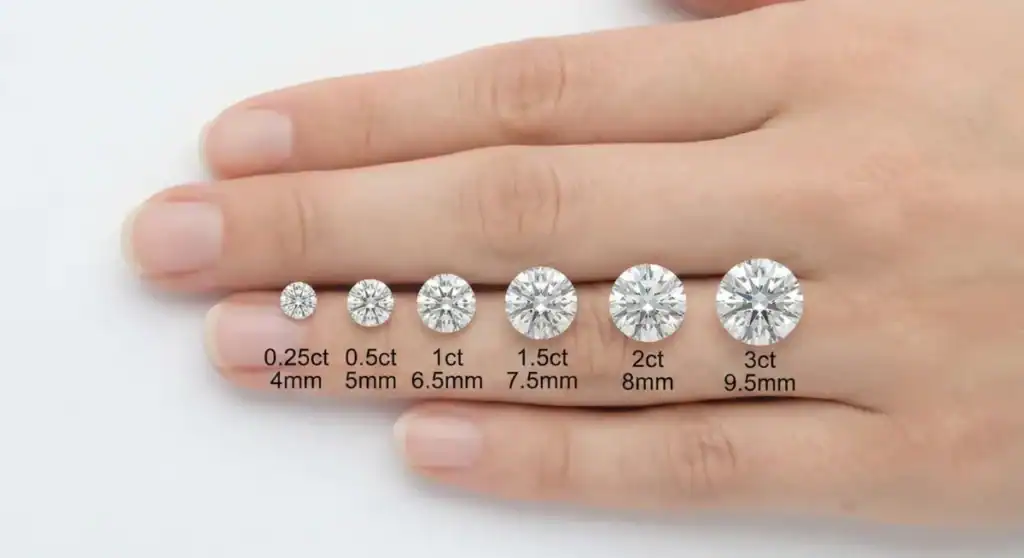
Carat measures weight, not size. A 1-carat diamond with an excellent cut can look larger than a poorly cut 1.2-carat stone.
Don’t chase carat weight alone. A smaller, well-cut diamond will always outshine a bigger, poorly cut one.
Key Finding: A 0.9 carat diamond costs 15-20% less than a 1.0 carat diamond of the same quality, with virtually no visible difference. The same applies to 1.9 vs 2.0 carats. Buy just below round numbers for the best value.
Shop by Carat Size
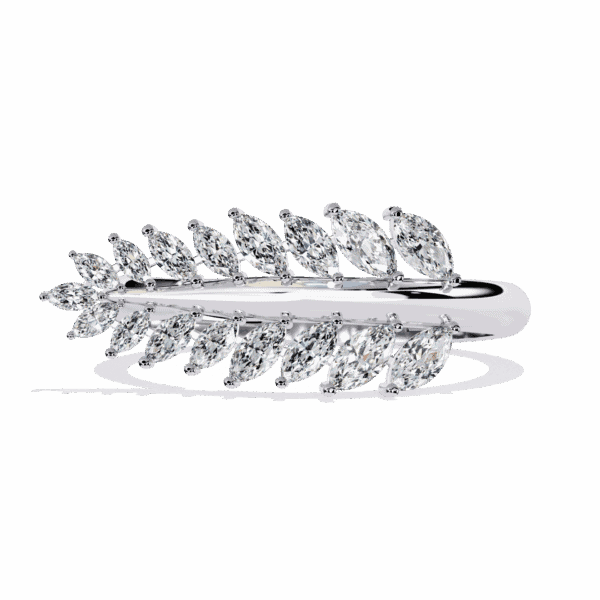
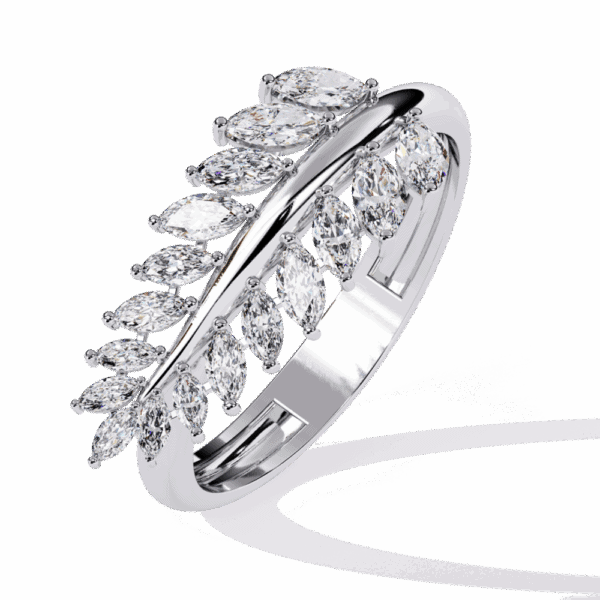
0.5 Carat Marquise Cut Statement Cocktail Ring
Price range: ₹37,314 through ₹63,241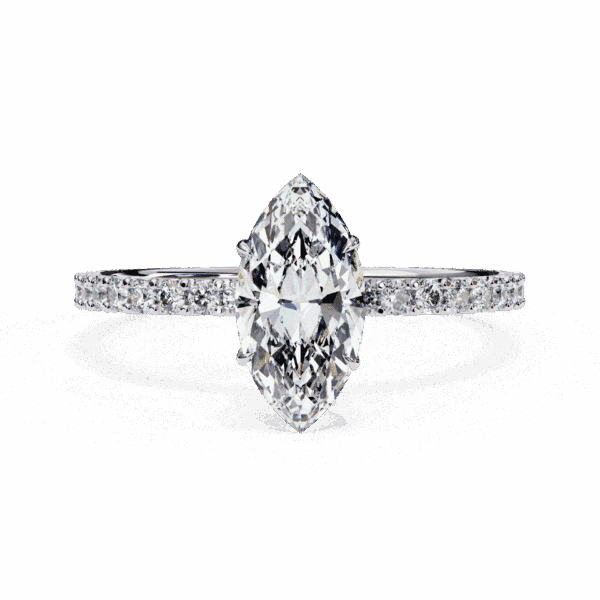
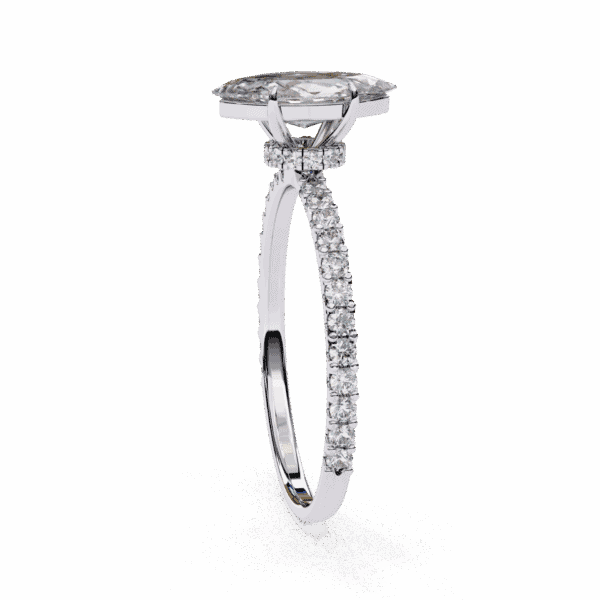
1 Carat Marquise Cut Modern Classic Solitaire Ring
Price range: ₹54,520 through ₹73,134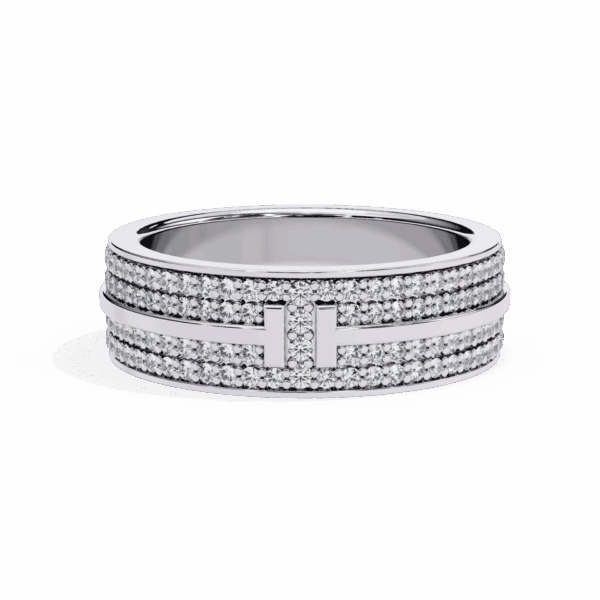
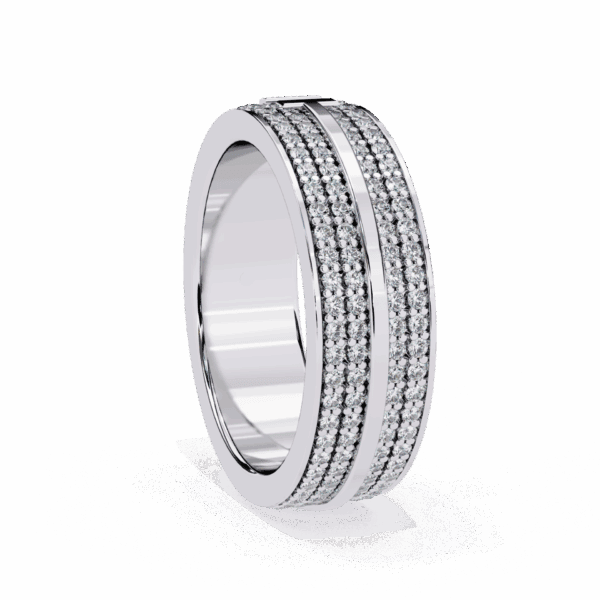
0.75 Carat Round Cut Classic Everyday Diamond Band
Price range: ₹118,690 through ₹223,495Quick Reference: What to Look For
Use this table as your shopping checklist.
| C | Best | Good | Avoid | Recommended |
|---|---|---|---|---|
| Cut | Excellent | Very Good | Good, Fair, Poor | Excellent |
| Clarity | FL, IF, VVS1, VVS2 | VS1, VS2 | SI2, I1, I2, I3 | VS1, VS2 |
| Colour | D, E, F | G, H, I | J and below | E, F, G |
| Carat | Based on budget | — | Chasing size over quality | 0.9 or 1.9 (just below round numbers) |
The Priority Order
If budget is a concern (and it usually is), here’s how to prioritise:
- Cut — Never compromise
- Colour — Stay in D-H range
- Clarity — VS1 or VS2 is enough
- Carat — Adjust based on budget
A stunning 0.8-carat diamond with excellent cut beats a dull 1-carat stone every time.
Lab-Grown vs Natural: The Real Difference
This is where the industry gets divided. Let’s cut through the noise.
Lab-grown diamonds are real diamonds. Same carbon structure. Same hardness (10 on the Mohs scale). Same sparkle. The only difference? They’re created in a controlled lab environment instead of being mined from the earth.
Key Finding: Lab-grown diamonds cost 60-70% less than natural diamonds of identical quality (same cut, clarity, colour, and carat). A ₹3 lakh natural diamond and a ₹1 lakh lab-grown diamond are chemically, physically, and optically identical.
Why Choose Lab-Grown?
- More diamond, more variety — The same budget that buys a tiny natural stone gets you a bigger, bolder lab-grown diamond. Experiment with shapes. Go bigger.
- Jewellery becomes fashion — Wear diamonds daily, not just on anniversaries. Stack rings. Layer pendants. When diamonds cost less, you actually enjoy them.
- Bold designs without the guilt — Always wanted a 2-carat emerald cut? A chunky tennis bracelet? Lab-grown makes statement pieces accessible.
- Quality you can see — That budget that once bought a small, yellowish, included natural diamond? It now buys a larger stone with E/F colour and VVS clarity.
- Sustainability is a bonus — No mining. No environmental damage. But honestly? The real win is wearing exceptional diamonds without the absurd markup.
Why Some Choose Natural?
- Perceived rarity and tradition
- Resale value (though often overstated)
- Emotional connection to “earth-made” stones
At Chaitra, we specialise in lab-grown diamonds because we believe you shouldn’t have to choose between quality and conscience.
Lab-Grown vs Natural: Quick Comparison
Lab-Grown vs Natural Diamonds: Summary
| Factor | Lab-Grown | Natural |
|---|---|---|
| Chemical composition | Pure carbon | Pure carbon |
| Hardness (Mohs scale) | 10 | 10 |
| Sparkle/brilliance | Identical | Identical |
| Price (same quality) | 60-70% less | Higher |
| Certification | IGI, GIA | IGI, GIA |
| Resale value | Lower | Higher (varies) |
| Environmental impact | Minimal | Mining required |
Source: Chaitra Fine Jewels analysis, January 2026
Explore Lab-Grown Diamond Jewellery
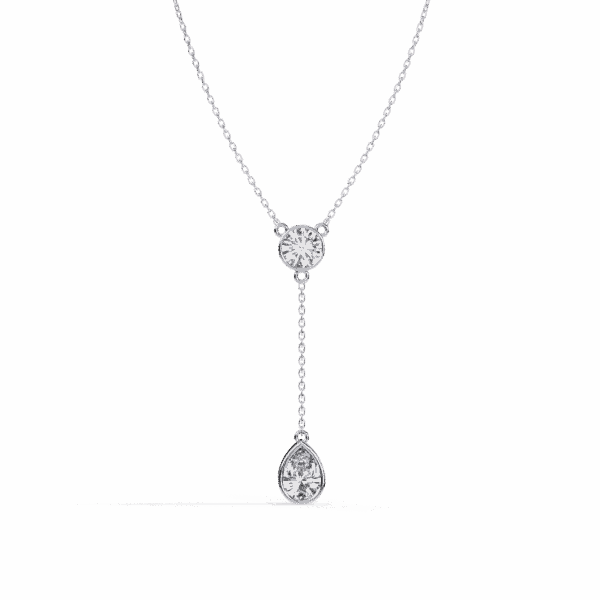
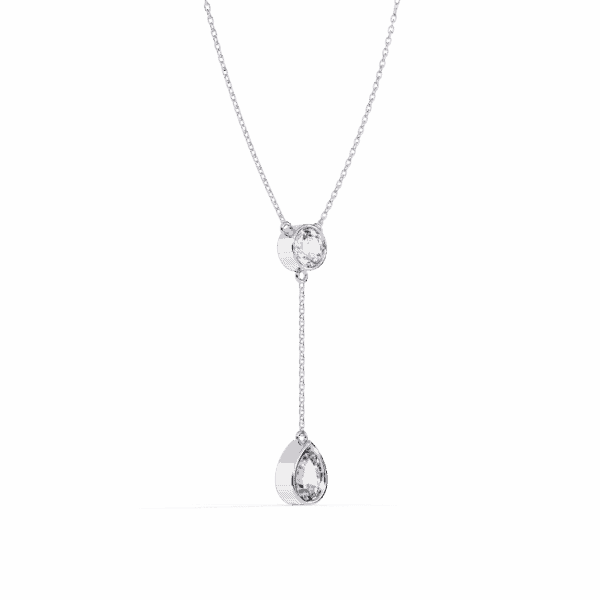
1 Carat Pear Drop Diamond Pendant
Price range: ₹45,295 through ₹55,831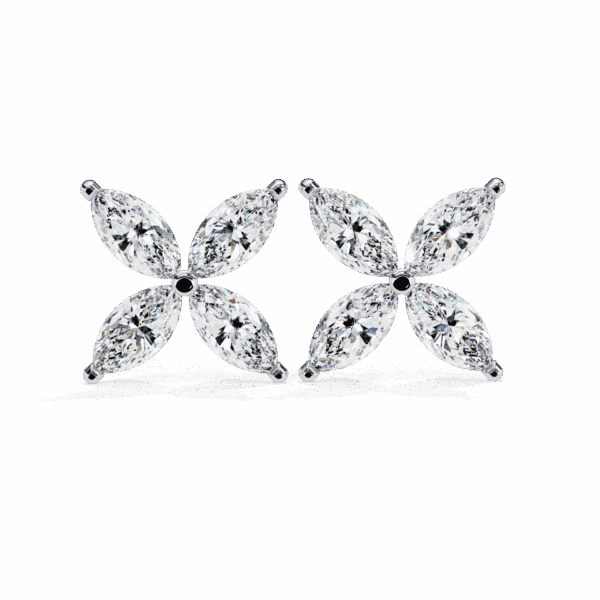
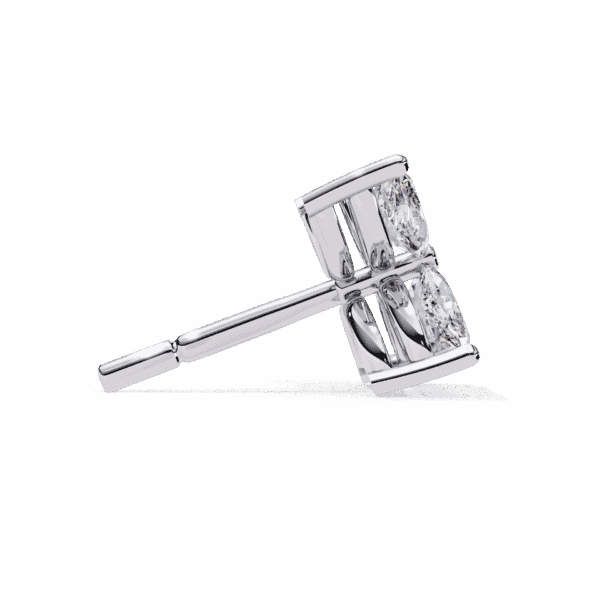
0.9 Carat Marquise Diamond Cluster Stud Earrings
Price range: ₹34,970 through ₹47,962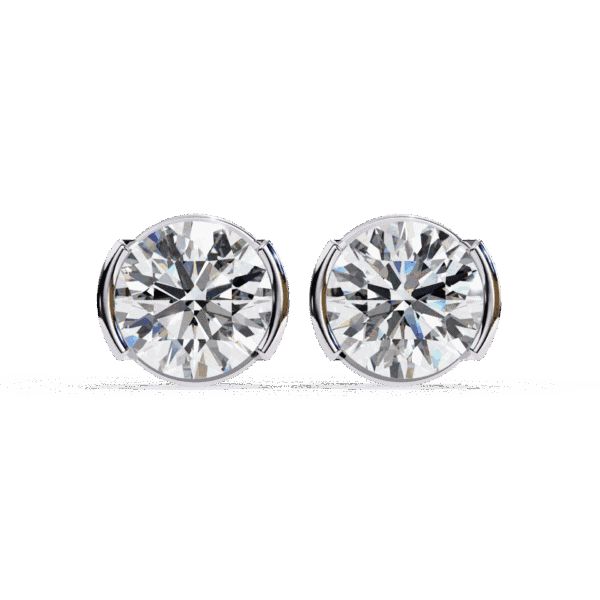
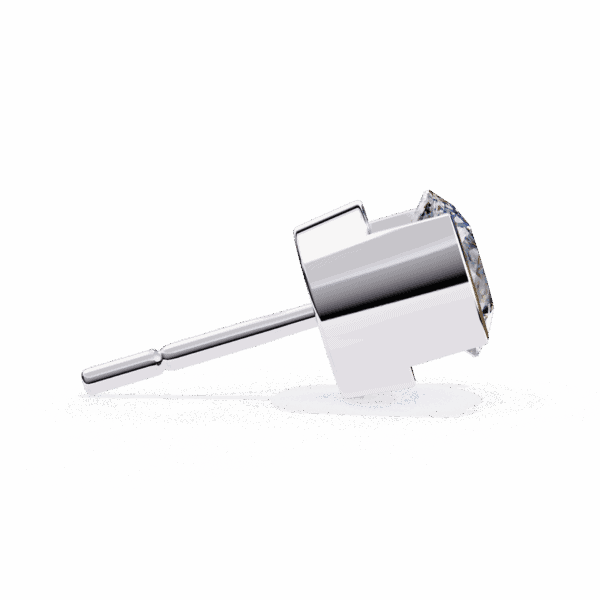
2.5 Carat Half Bezel Round Solitaire Diamond Earrings
Price range: ₹131,929 through ₹160,041Certifications: Your Proof of Quality
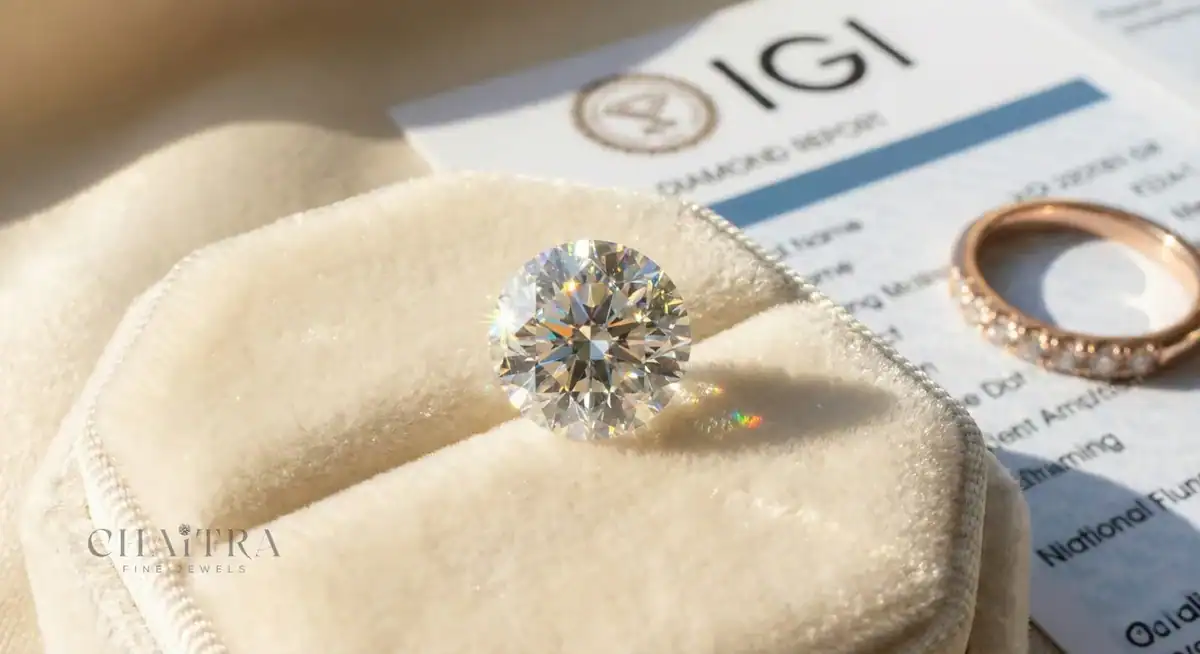
Never buy an uncertified diamond. A certificate is your proof that the diamond has been independently graded.
The major certifying labs:
IGI (International Gemological Institute) — Widely trusted, especially for lab-grown diamonds.
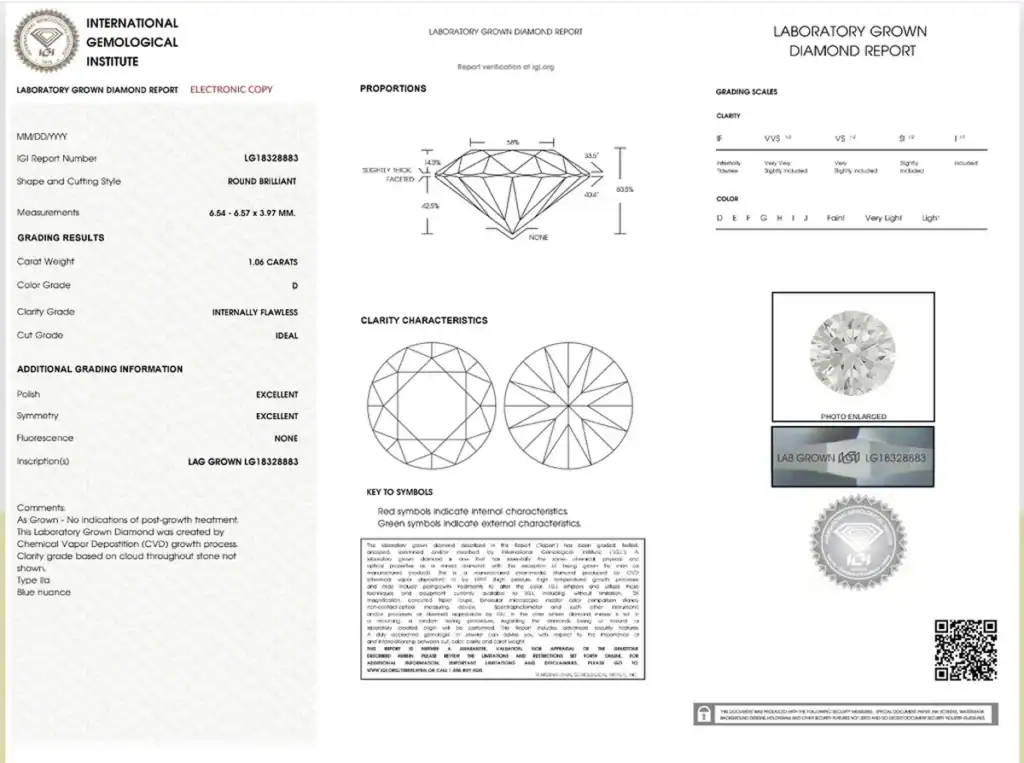
GIA (Gemological Institute of America) — The gold standard for natural diamonds.
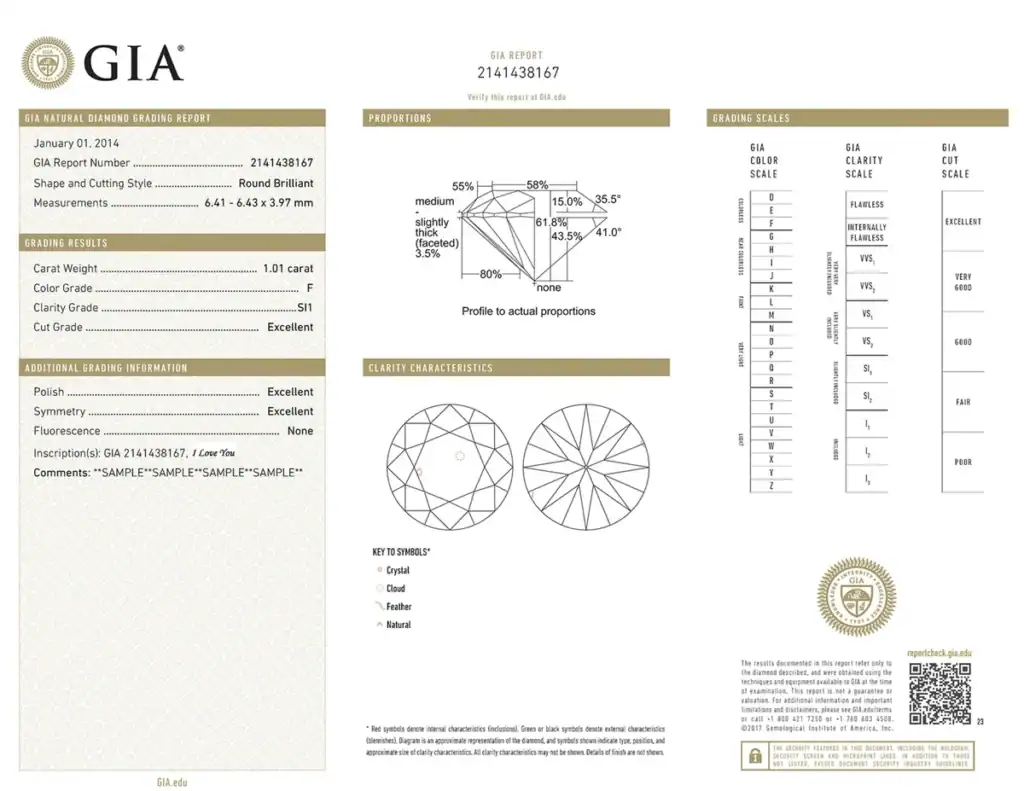
At Chaitra, every diamond comes with IGI certification, so you know exactly what you’re getting.
Key Finding: An uncertified diamond is a gamble. Without IGI or GIA certification, you have no independent proof of the diamond’s actual quality. The certificate is your protection against overpaying for a lower grade.
Verifying Your Certificate
Every IGI and GIA certificate can be verified online:
Just enter the certificate number to see the exact grades, measurements, and details on record.
For larger diamonds (0.30 carat and above), the certificate number is laser-engraved on the diamond’s girdle. You can see it under magnification.
For smaller diamonds or jewellery with multiple stones, the piece is certified as a whole. At Chaitra, every piece comes with either an individual diamond certificate or a jewellery certificate.
Gold Purity: 14K vs 18K vs 22K
Diamonds get the spotlight, but the gold they’re set in matters too.
| Purity | Gold Content | Best For |
|---|---|---|
| 22K | 91.6% gold | Traditional Indian jewellery, softer |
| 18K | 75% gold | Fine jewellery, balance of purity and durability |
| 14K | 58.5% gold | Everyday wear, most durable |
Which Should You Choose?
- 22K — Rich yellow colour, softer, best for occasional wear
- 18K — Great balance, suitable for diamond settings, most popular for engagement rings
- 14K — Harder, more scratch-resistant, ideal for daily wear
For diamond jewellery you’ll wear often, 14K or 18K is usually the smarter choice. The metal is stronger and holds stones more securely.
At Chaitra, all our gold is BIS hallmarked — your guarantee of purity.
Budget Guide: What to Expect
Here’s what you can expect at different budget levels with lab-grown diamonds.
| Budget | Our Suggestion (Cut, Clarity, Colour, Carat) |
|---|---|
| Under ₹30,000 | Excellent cut, VS2, G-H colour, 0.3-0.5ct |
| ₹30,000 – ₹75,000 | Excellent cut, E-G colour, VS1-VS2, 0.5-1ct |
| ₹75,000 – ₹1,50,000 | Excellent cut, VS1, D-F colour, 1-1.5ct |
| Above ₹1,50,000 | Excellent cut, D-E colour, VVS2-VS1, 1.5ct+ |
These are lab-grown diamond prices. For natural diamonds of the same quality, multiply by 3-4x.
Shop by Budget
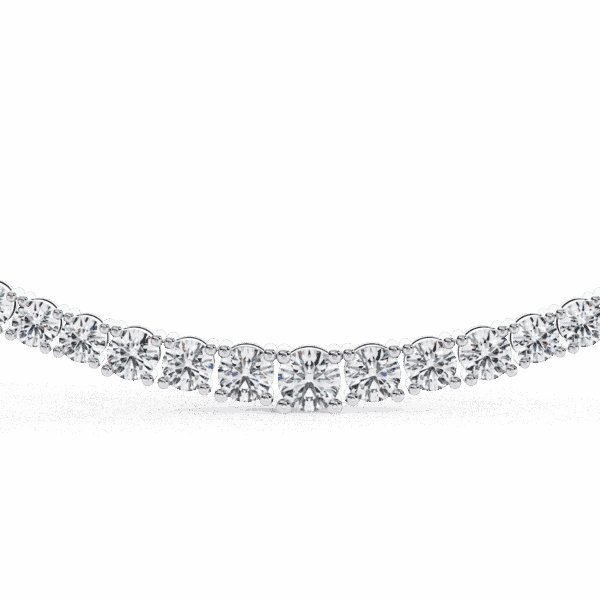
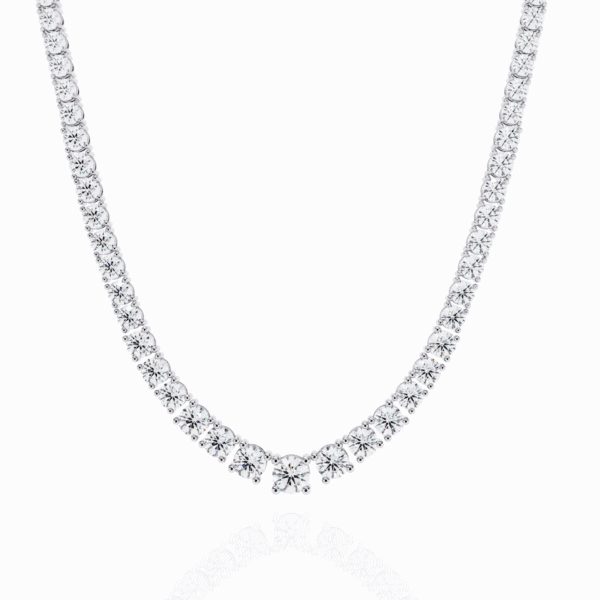
17.5 Carat The Aurora Round Diamond Tennis Necklace
Price range: ₹838,614 through ₹1,235,833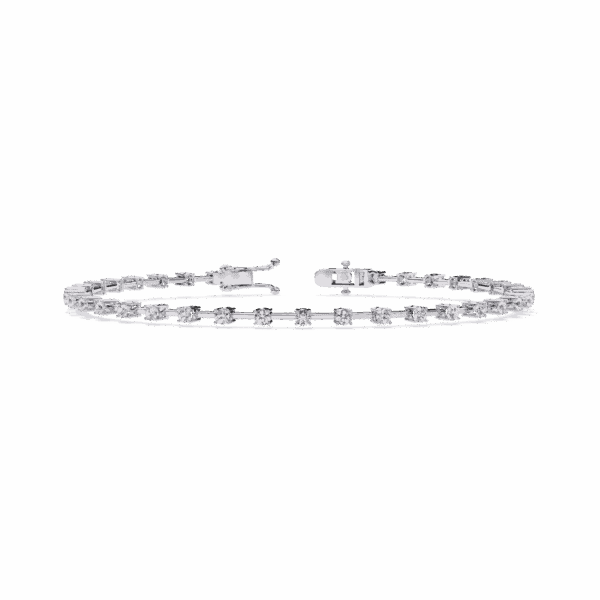
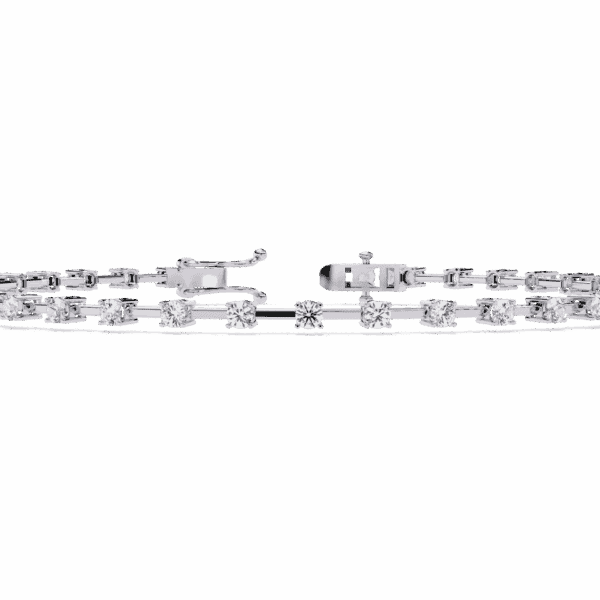
1 Carat Light Line Diamond Tennis Bracelet
Price range: ₹66,848 through ₹111,773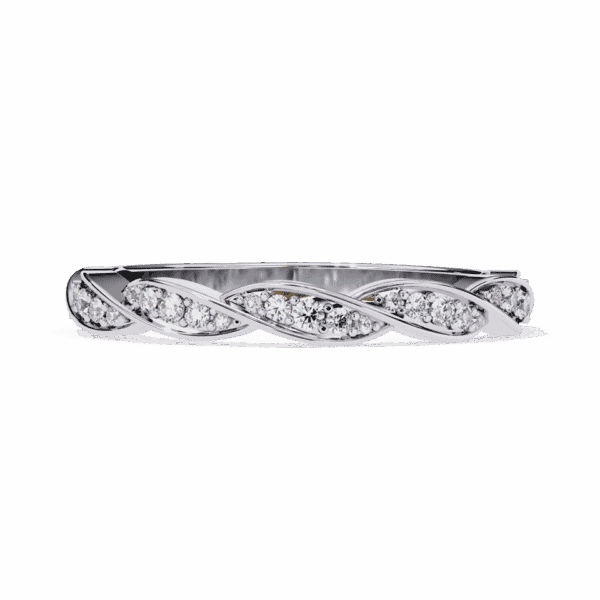
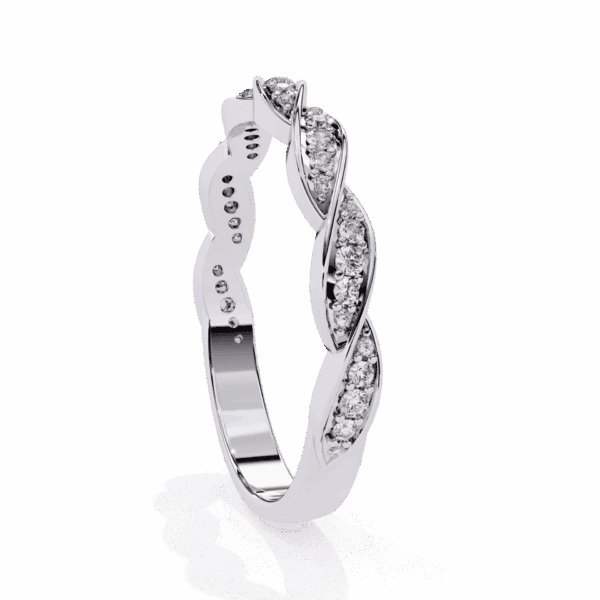
0.35 Carat Round Cut Classic Everyday Diamond Band
Price range: ₹43,082 through ₹79,653How to Get the Best Value
A few insider tips from this diamond buying guide:
1. Buy just below round numbers
A 0.9-carat diamond looks nearly identical to a 1-carat diamond, but costs noticeably less. Same applies to 1.9 vs 2 carats.
2. Choose lab-grown
You get more diamond for the same money. That budget that buys a small natural stone can get you a significantly larger lab-grown diamond.
3. Prioritise cut over carat
Sparkle beats size. Every time.
4. Stick to VS clarity
You’re paying extra for flaws you can’t see anyway.
5. Check the certificate
Don’t rely on a salesperson’s word. Verify the grading yourself online.
6. Consider oval or pear shapes
Fancy shapes often look larger than round diamonds of the same carat weight, and typically cost 10-20% less.
Key Finding: Following these six tips can save you 40-50% compared to buying a round-number carat, Flawless clarity, natural diamond without checking the certificate. Smart buying is about knowing where to compromise and where not to.
About This Data
Diamond grades in this guide follow IGI (International Gemological Institute) and GIA (Gemological Institute of America) standards. Price estimates are based on Chaitra Fine Jewels’ lab-grown diamond inventory as of January 2026. Natural diamond prices are estimates based on market data. All Chaitra diamonds are IGI certified. All gold is BIS hallmarked. This guide is updated quarterly.
Frequently Asked Questions
What are the 4Cs of diamonds?
The 4Cs are Cut, Clarity, Colour, and Carat. Cut determines how well the diamond sparkles. Clarity measures internal imperfections. Colour grades from D (colourless) to Z (yellow tint). Carat measures weight. Cut is the most important of the four.
Which C is most important when buying a diamond?
Cut is the most important. A well-cut diamond sparkles brilliantly regardless of size. Never compromise on cut grade — always choose Excellent or Very Good. A well-cut smaller diamond will always outshine a poorly cut larger one.
Are lab-grown diamonds real diamonds?
Yes. Lab-grown diamonds have the same carbon structure, hardness (10 on Mohs scale), and optical properties as natural diamonds. They’re certified by the same labs (IGI, GIA) using identical grading standards. The only difference is origin.
How much cheaper are lab-grown diamonds than natural?
Lab-grown diamonds typically cost 60-70% less than natural diamonds of identical quality. A 1-carat lab-grown diamond that costs ₹80,000 would cost ₹2.5-3 lakh as a natural diamond with the same cut, clarity, and colour grades.
What clarity grade should I buy?
VS1 or VS2 offers the best value. Inclusions at these grades are invisible to the naked eye without 10x magnification, but cost 30-50% less than Flawless grades. You’re paying extra for flaws you literally cannot see.
What colour grade should I look for?
D-F (colourless) or G-H (near colourless) are recommended. Below H, you may notice a faint yellow tint, especially in white gold or platinum settings. For yellow gold settings, you can go slightly lower since the warm metal colour masks slight tints.
What’s the difference between 14K, 18K, and 22K gold?
22K is 91.6% gold (softest, richest colour). 18K is 75% gold (balanced). 14K is 58.5% gold (most durable). For everyday diamond jewellery, 14K or 18K is recommended because the harder metal holds stones more securely.
How do I verify a diamond certificate?
Enter the certificate number at igi.org/verify-your-report (for IGI) or gia.edu/report-check (for GIA) to see the exact grades, measurements, and details on record.
Should I buy a certified diamond?
Always. A certificate from IGI or GIA is your independent proof of the diamond’s quality. Without certification, you have no way to verify the seller’s claims about cut, clarity, colour, and carat. Never buy an uncertified diamond.
What’s the best carat size for the value?
Buy just below round numbers. A 0.9 carat diamond costs 15-20% less than a 1.0 carat diamond with virtually no visible difference. The same applies to 1.9 vs 2.0 carats. These “magic numbers” carry price premiums.
Which diamond shape is best?
Round brilliant is the most popular and typically the most expensive. Oval, pear, and cushion cuts often look larger for the same carat weight and cost 10-20% less. The best shape is ultimately the one you or the wearer prefers.
Can you tell the difference between lab-grown and natural diamonds?
Not without specialized equipment. Lab-grown and natural diamonds are chemically, physically, and optically identical. Even expert gemologists cannot distinguish them by eye. Only advanced spectroscopy can detect the origin.
What’s BIS hallmarking?
BIS (Bureau of Indian Standards) hallmarking is the government’s certification of gold purity in India. A BIS hallmark guarantees that the gold is exactly the purity claimed (14K, 18K, or 22K). Always buy hallmarked gold.
How much should I spend on an engagement ring?
There’s no rule. The “three months salary” guideline was invented by diamond marketers. Spend what you’re comfortable with. With lab-grown diamonds, you can get a stunning 1+ carat ring in the ₹75,000-1,50,000 range.
Do lab-grown diamonds have resale value?
Lab-grown diamonds have lower resale value than natural diamonds. However, natural diamond resale value is also often overstated. Most retail diamond jewellery (natural or lab-grown) resells for 30-50% of retail price. Buy for the beauty, not as an investment.
Ready to Find Yours?
Buying a diamond doesn’t have to be stressful. Know the 4Cs. Understand lab-grown vs natural. Check the certification. Choose the right gold.
At Chaitra, we show you everything upfront: the diamond grade, the gold purity, the price breakup. No hidden margins. No confusing jargon. Every diamond is IGI certified. Every gold setting is BIS hallmarked.
Not sure where to start? Try our AI Lookbook to see how any piece looks on you before buying.
Bestselling Diamond Rings
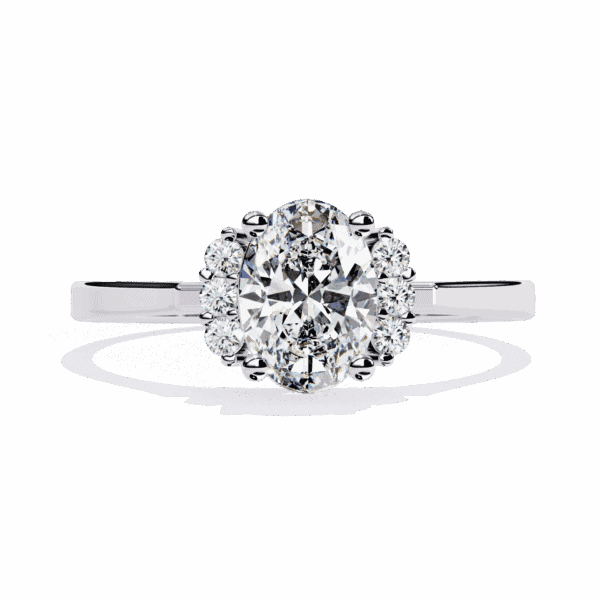
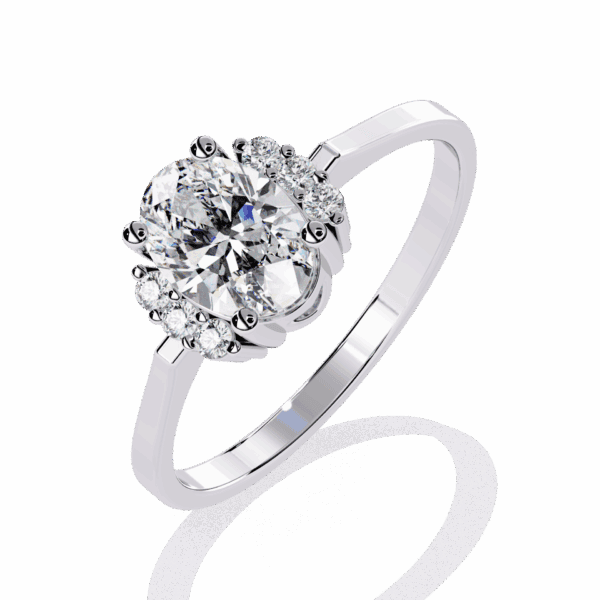
0.75 Carat Round Cut Classic Solitaire Band
Price range: ₹45,556 through ₹70,721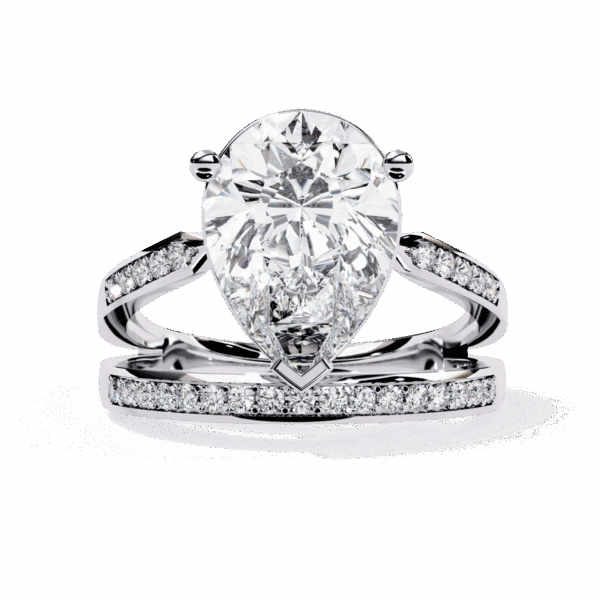
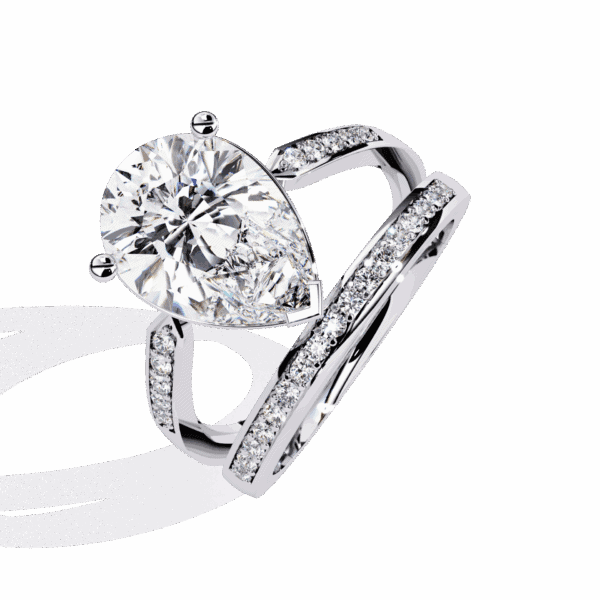
5.75 Carat Pear Cut Solitaire in Bezel Setting
Price range: ₹476,485 through ₹551,322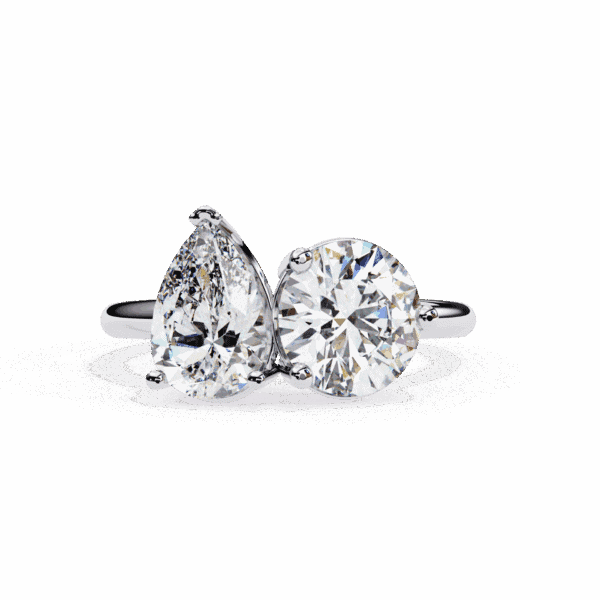
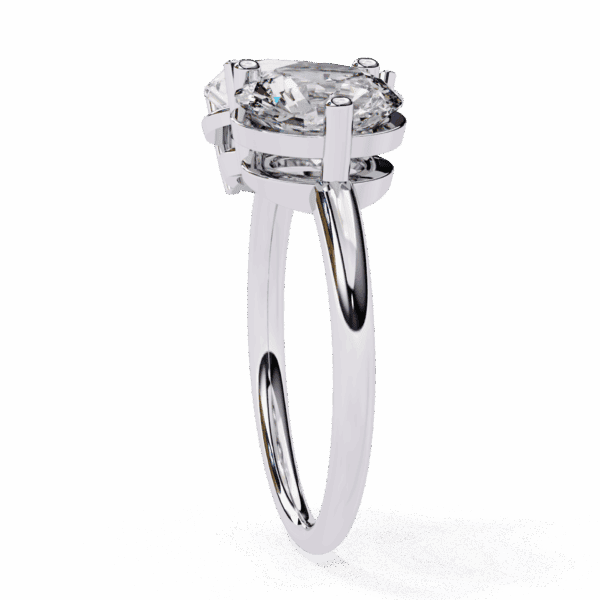
3.75 Carat Pear and Round Cut Toi et Moi Solitaire Ring
Price range: ₹212,009 through ₹261,736
Explore Collection
Book Consultation
Need help choosing? WhatsApp | +91 90199 21267
About the Author: This guide is written and maintained by the Chaitra Fine Jewels team, Bengaluru. We specialize in IGI-certified lab-grown diamond jewellery since 2022. For questions about diamonds or custom designs, book a consultation or reach us on WhatsApp.